 OpenDissect
All fractures › Dislocations
Perilunate and lunate dislocation
Mayfield I–IVLesser and greater arc carpal injuries
See it in 3D on the real bones, displace and reduce it, with simulated X-ray and CT — free, in your browser.
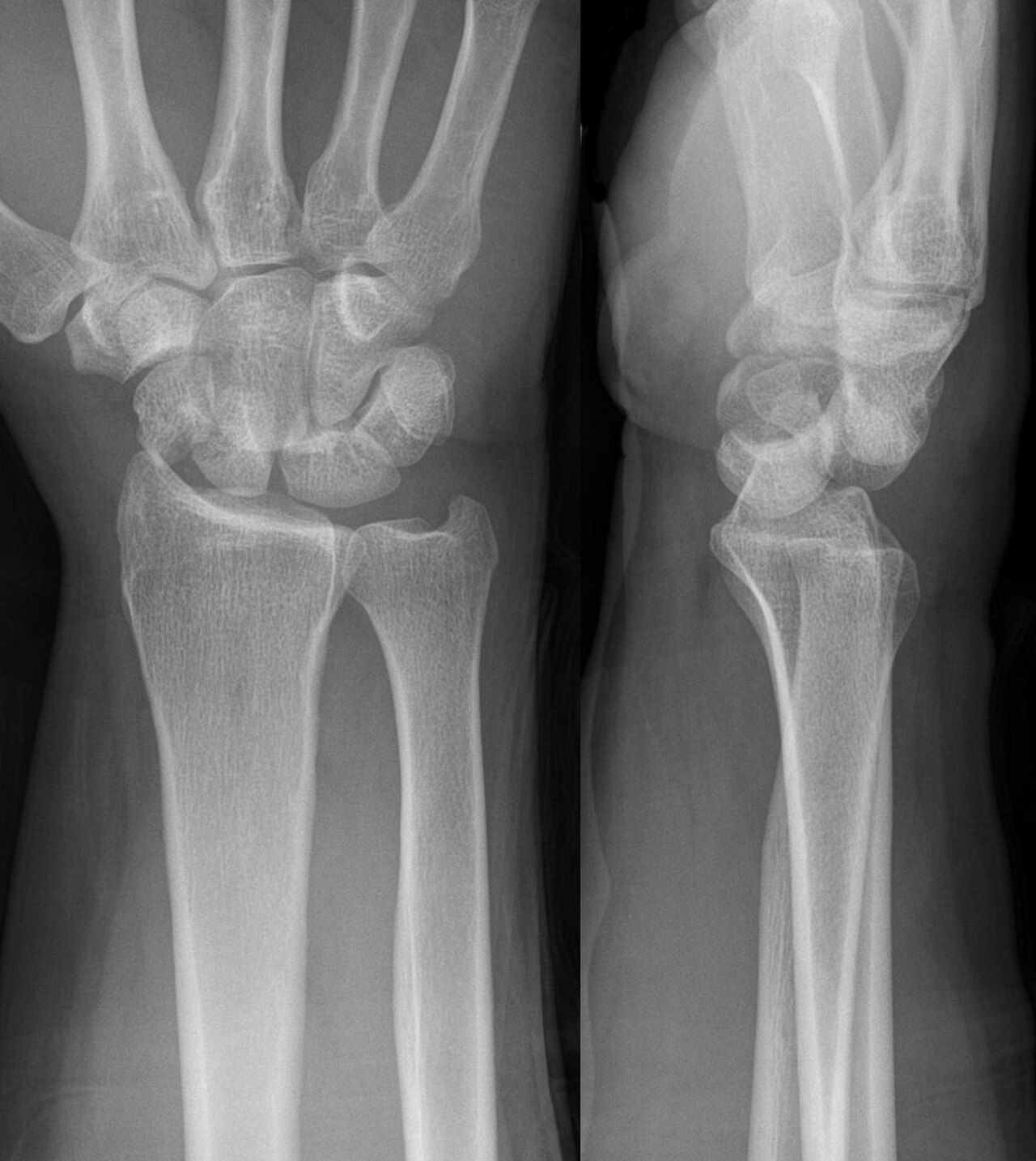
Open in 3D →High-energy wrist injuries that tear the ligaments around the lunate in sequence. Up to a quarter are missed at first. On the lateral view the radius, lunate and capitate should stack in a straight line ("three cups").
Mechanism
Fall from height or motorbike crash with the wrist extended, ulnarly deviated and supinated.
Clinical findings
- Painful, swollen wrist that looks less deformed than the injury deserves.
- Median nerve compression (acute carpal tunnel syndrome) is common: check sensation and treat urgently.
Imaging
- PA: broken Gilula arcs, the lunate looks triangular ("piece of pie"). Lateral: the capitate is out of the lunate cup (perilunate) or the lunate is tipped volarly ("spilled teacup"). CT for associated fractures.
Classification
- Mayfield I
- Scapholunate ligament tear.
- Mayfield II
- + capitolunate disruption.
- Mayfield III
- + lunotriquetral tear: perilunate dislocation.
- Mayfield IV
- Lunate dislocation.
- Lesser vs greater arc
- Lesser arc: ligaments only. Greater arc: through bones (trans-scaphoid, transradial styloid, transcapitate, transtriquetral).
Types shown in 3D
- Perilunate (dorsal)
- Lesser-arc injury: the lunate stays on the radius and the rest of the carpus dislocates dorsally around it. The capitate no longer sits in the lunate cup on the lateral view.
- Lunate dislocation
- The end stage (Mayfield IV): the capitate drops back into line with the radius and pushes the lunate out volarly; the lunate tips over like a "spilled teacup". It can compress the median nerve in the carpal tunnel.
- Trans-scaphoid perilunate
- Greater-arc injury: the force passes through the scaphoid. The proximal pole stays with the lunate, the distal scaphoid goes with the carpus. The commonest pattern of greater-arc injury.
Treatment
- Emergency
- Prompt closed reduction under anaesthesia and splint; urgent carpal tunnel release if median nerve symptoms persist.
- Definitive
- Open reduction and repair of the scapholunate and lunotriquetral ligaments with K-wire or screw fixation of the carpus (dorsal ± volar approach); fixation of the scaphoid in trans-scaphoid injuries.
Aftercare
Cast 8–12 weeks, K-wires removed at about 8 weeks, then therapy.
Complications
- Missed injury (chronic dislocation: salvage only)
- Median nerve injury
- Carpal instability and post-traumatic arthritis
- Avascular necrosis of the lunate or scaphoid
See it in 3D on the real bones, displace and reduce it, with simulated X-ray and CT — free, in your browser.
Open in 3D →