 OpenDissect
All fractures › Pelvis & spine
Pelvic ring injuries
AO/OTA 61From rami fractures to open book
See it in 3D on the real bones, displace and reduce it, with simulated X-ray and CT — free, in your browser.
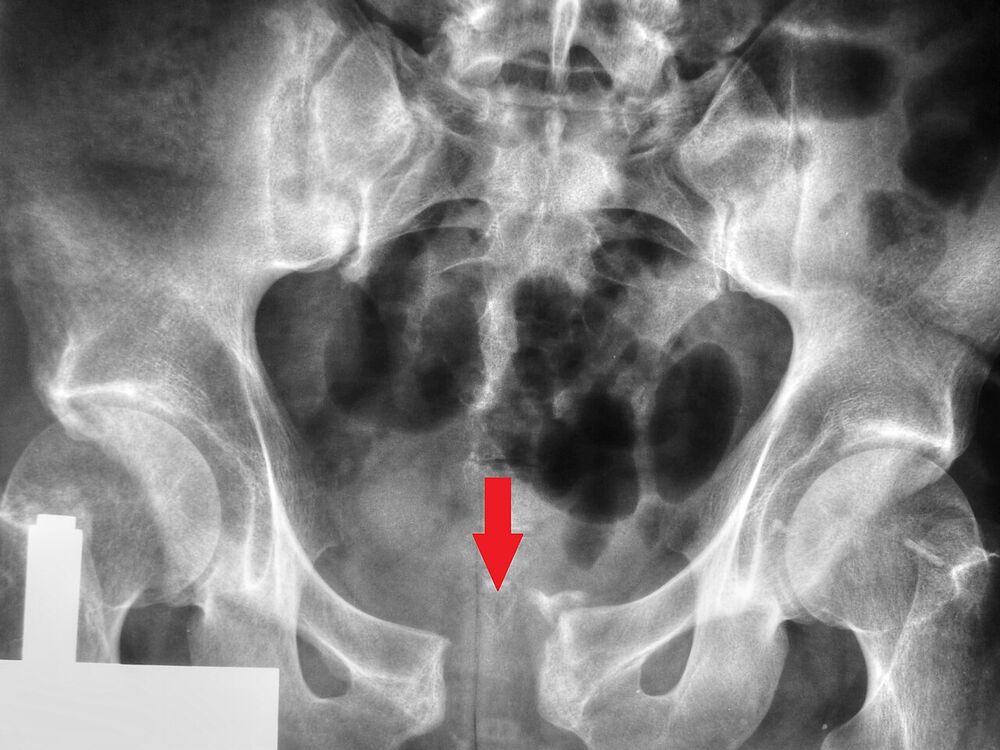
Open in 3D →The pelvis is a ring: a break in one place usually means a second injury elsewhere (often the sacroiliac joint or sacrum). Stability depends on the posterior ligaments. High-energy injuries can bleed massively from the venous plexus and fractured bone.
Mechanism
Low energy: falls in the elderly (pubic rami, sacral insufficiency). High energy: road traffic, crush, falls from height.
Clinical findings
- ATLS: pelvic binder centred on the greater trochanters for haemodynamic instability; do not spring the pelvis repeatedly.
- Look for urethral injury (blood at the meatus), rectal and vaginal injury (open fracture), and lumbosacral nerve deficits.
Imaging
- AP pelvis in the trauma bay.
- Inlet (40° caudal) and outlet (40° cephalic) views, or CT with reconstructions (standard in most centres).
- CT angiography if haemodynamically unstable and contrast blush is suspected; urethrogram if blood at the meatus.
- AP pelvis in the trauma bay; CT with contrast. Inlet and outlet views for displacement.
Classification
- 61A
- Posterior arch intact (stable): avulsions, iliac wing, isolated rami.
- 61B
- Incomplete posterior disruption (rotationally unstable): B1 open book, B2 lateral compression.
- 61C
- Complete posterior disruption (rotationally and vertically unstable).
- Young–Burgess
- By mechanism: lateral compression (LC I–III), anteroposterior compression (APC I–III), vertical shear, combined.
Types shown in 3D
- 61A2 (rami)
- Isolated pubic rami fractures, posterior arch intact: stable. Mobilise as pain allows (elderly). Look for an occult sacral fracture on CT.
- 61B1 open book (APC)
- Anteroposterior compression: the symphysis opens and both hemipelves rotate outwards on intact posterior ligaments. Binder first; symphyseal plate.
- 61B2 lateral compression
- A side impact crushes the hemipelvis inwards: rami fractures with internal rotation (and a sacral buckle). Often stable enough for non-operative care.
- 61C1 vertical shear
- Complete posterior disruption: the hemipelvis migrates upwards and backwards. Unstable in every direction: traction, then iliosacral screws and anterior fixation.
Treatment
- Stable (61A, LC I)
- Analgesia, mobilise with weight bearing as tolerated; osteoporosis work-up in the elderly.
- Bleeding patient
- Binder, resuscitation with blood products, then angioembolisation and/or preperitoneal packing; external fixator or C-clamp.
- Unstable (61B/C)
- Definitive fixation: symphyseal plate for open book; iliosacral or transsacral screws, anterior plates or posterior tension band for posterior instability.
Aftercare
Protected weight bearing on the injured side 6–12 weeks for unstable injuries.
Complications
- Haemorrhage
- Urogenital injury, sexual dysfunction
- Chronic posterior pain, leg-length discrepancy
- Venous thromboembolism
See it in 3D on the real bones, displace and reduce it, with simulated X-ray and CT — free, in your browser.
Open in 3D →