 OpenDissect
Tracheostomy: a breathing tube in the neck
Surgical tracheostomy
The same explanation in 3D, step by step: what is broken or ill, how the operation is done, with the X-ray and a QR code to take home. Free.
See it in 3D →What is the problem
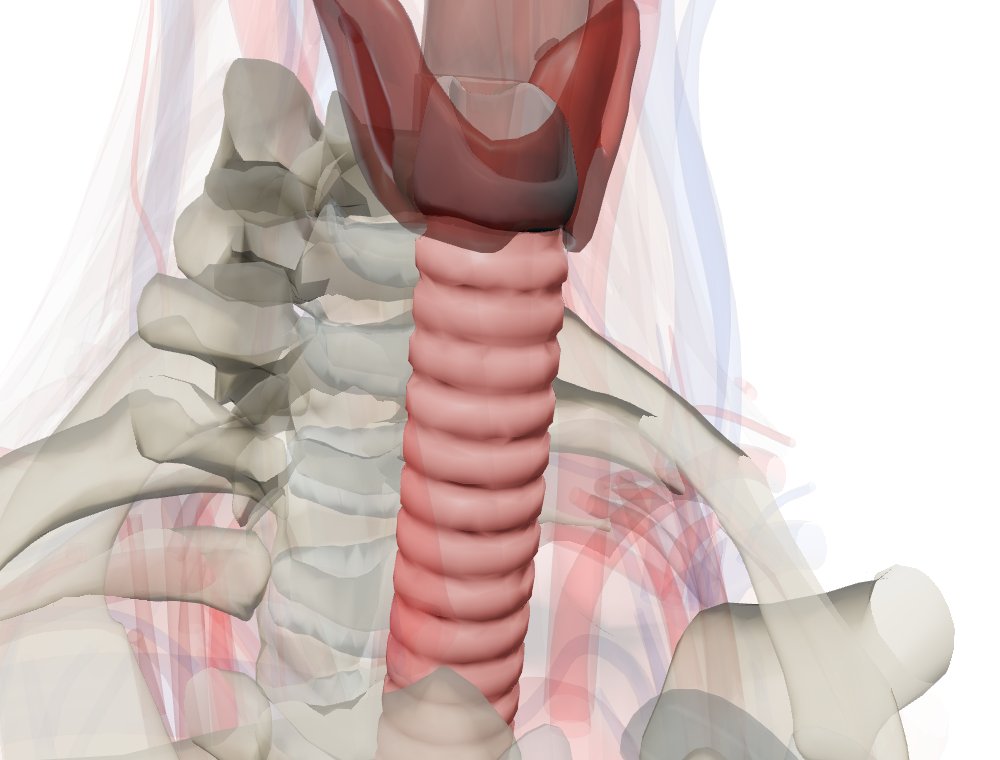
Some people need help with breathing for a long time, for example in intensive care after a serious illness, or have a blocked upper airway (from swelling, a tumour or an injury). A breathing tube through the mouth is uncomfortable and can damage the voice box if it stays for weeks.
Why an operation
A short tube placed directly into the windpipe through the front of the neck is more comfortable, needs less sedation, makes it easier to clear secretions and to wean off the breathing machine, and bypasses a blocked upper airway. It is often temporary.
How the operation is done
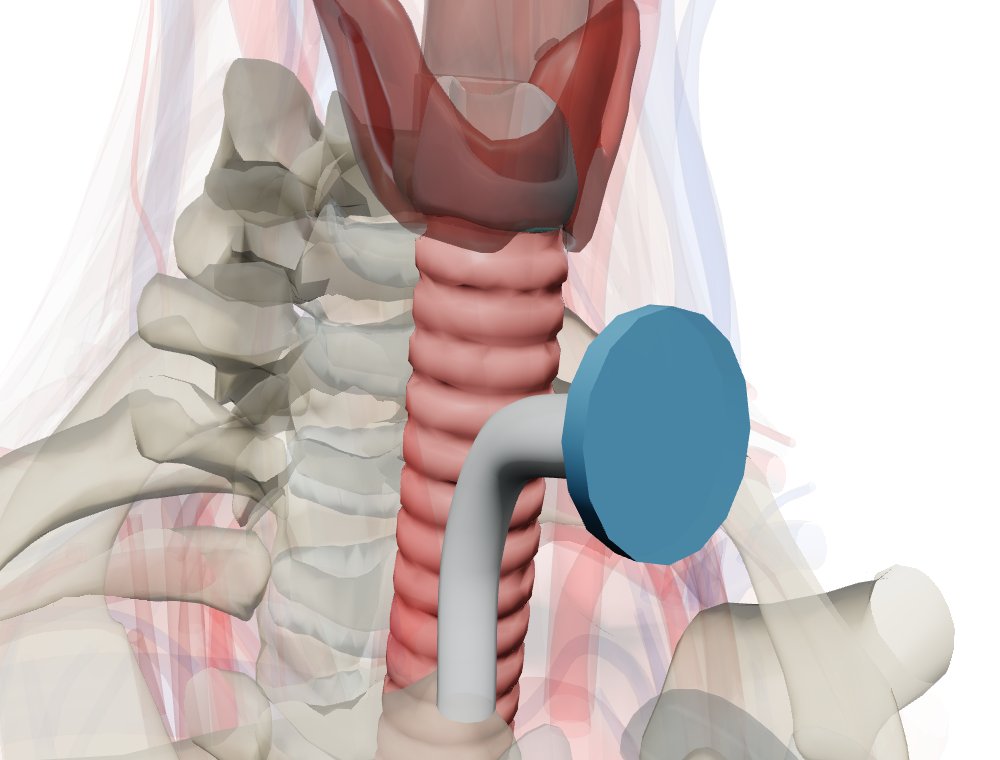
With the head tilted back, a short cut is made low in the front of the neck. The neck muscles are moved aside and the thyroid gland, which lies over the windpipe, is moved or divided. A small opening is made between the rings of the windpipe and the tube is put in and tied around the neck. In intensive care it is often done through a needle and dilators at the bedside. It takes about 20 to 45 minutes.
Anaesthesia and the hospital stay
It is usually done under general anaesthesia or deep sedation, in the operating room or at the bedside in intensive care. Sometimes, in an emergency, it is done with local anaesthesia while awake.
Possible risks
- Bleeding around the tube — about 2 to 5 in 100
- The tube slips out or blocks with mucus, needing quick replacement — uncommon; the team checks it regularly
- Infection of the opening — about 2 to 5 in 100
- Narrowing of the windpipe later on — about 1 to 3 in 100
- Air under the skin or around the lung — about 1 to 2 in 100
- A visible scar on the neck — always; it fades over time
These figures are approximate. Your surgeon will tell you what applies to you.
After the operation
With the tube in place, speaking is not possible at first; writing, boards or a speaking valve help later. The air is humidified and secretions are suctioned. When breathing has recovered, the tube is made smaller or capped and finally removed; the opening then closes by itself within one to two weeks.
Questions people often ask
- Is it permanent?
- Usually not. Most tracheostomies are removed when breathing has recovered; a few people need one long term.
- When should I call the hospital?
- At once if breathing becomes difficult, the tube comes out or blocks, or there is bright red bleeding; also with fever or redness around the opening.
The same explanation in 3D, step by step: what is broken or ill, how the operation is done, with the X-ray and a QR code to take home. Free.
See it in 3D →