 OpenDissect
Torn Achilles tendon: stitching it
Achilles tendon rupture · repair
The same explanation in 3D, step by step: what is broken or ill, how the operation is done, with the X-ray and a QR code to take home. Free.
See it in 3D →What is the problem
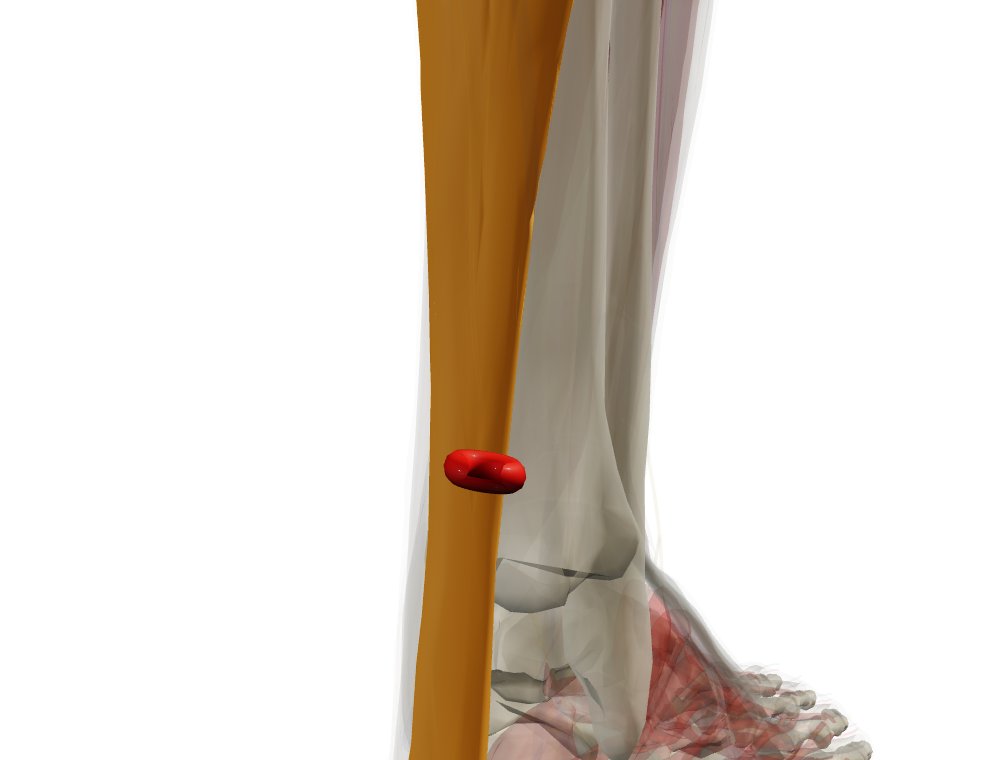
The Achilles tendon joins the calf muscles to the heel and lets you push off when walking, running or standing on tiptoe. It usually tears a few centimetres above the heel during a sudden push-off, for example in racket sports. People often feel a kick or hear a snap, then cannot push off properly.
Why an operation
Both an operation and treatment in a special boot with the foot pointed down (without operation) can give good results when started early. The operation slightly lowers the risk of the tendon tearing again, but carries wound risks. Your surgeon will discuss which suits you, your sport and your health.
How the operation is done
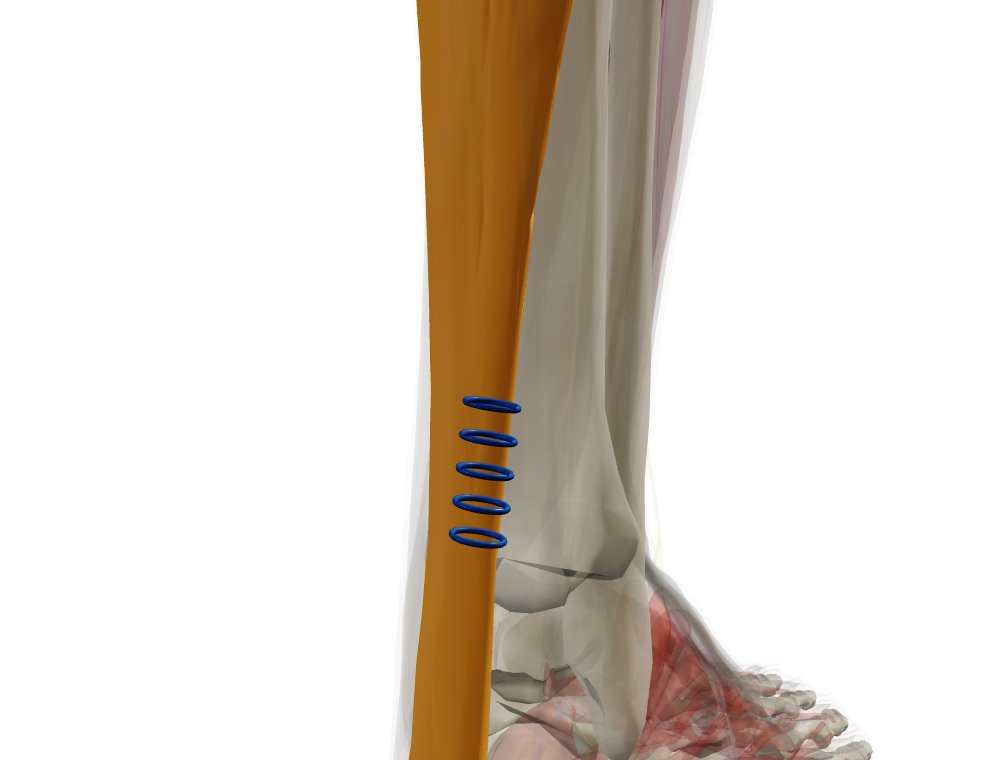
You lie on your front. Through a cut on the inner side of the back of the ankle, or through several small cuts, the two torn ends are brought together with strong stitches. It usually takes about an hour.
Anaesthesia and the hospital stay
You will be numb from the waist down (spinal anaesthesia) or asleep. Many people go home the same day or the next day.
Possible risks
- Wound healing problems or infection — about 2 to 5 in 100
- The tendon tears again — about 2 to 4 in 100 (somewhat more without operation)
- Numbness on the outer edge of the foot (sural nerve) — about 1 to 3 in 100
- Calf weakness that lasts — common to some degree
- Blood clot in the leg or lung — about 1 in 100
These figures are approximate. Your surgeon will tell you what applies to you.
After the operation
You wear a boot with heel wedges that keep the foot pointed down, removed step by step over six to eight weeks; you can usually put weight on it early. Injections or tablets prevent clots. Physiotherapy rebuilds calf strength. Running is usually possible after about four to six months, full sport after nine to twelve months.
Questions people often ask
- When should I call the hospital?
- If the wound gets red, warm or leaks, if you get a fever, if pain or swelling suddenly get worse, if the foot becomes numb or cold, or if the calf swells and hurts.
The same explanation in 3D, step by step: what is broken or ill, how the operation is done, with the X-ray and a QR code to take home. Free.
See it in 3D →