 OpenDissect
Thyroid operation: removing the thyroid
Thyroidectomy · cut low in the neck
The same explanation in 3D, step by step: what is broken or ill, how the operation is done, with the X-ray and a QR code to take home. Free.
See it in 3D →What is the problem
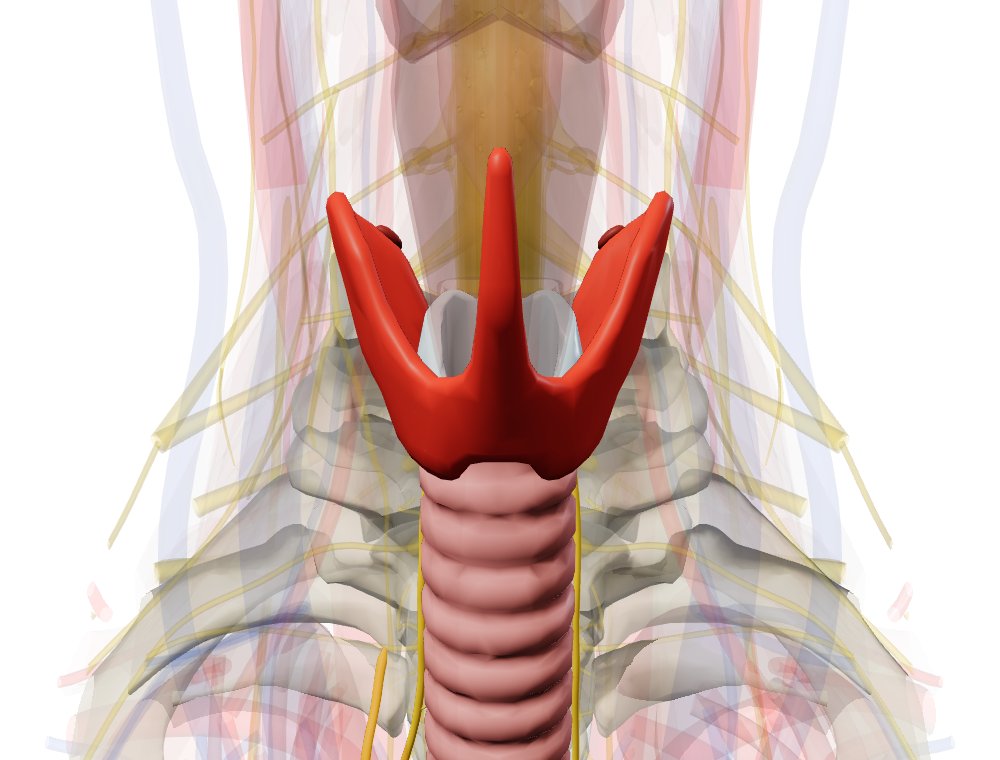
The thyroid is a butterfly-shaped gland at the front of the neck, below the Adam's apple. It makes the hormone that sets the pace of the body. It can become enlarged (goitre), form lumps (nodules), become overactive, or, rarely, develop cancer.
Why an operation
An operation is advised when a goitre presses on the windpipe or the gullet, when a nodule might be cancer or is cancer, or when an overactive thyroid cannot be controlled well with tablets or radioiodine. Depending on the problem, half of the gland or all of it is removed.
How the operation is done
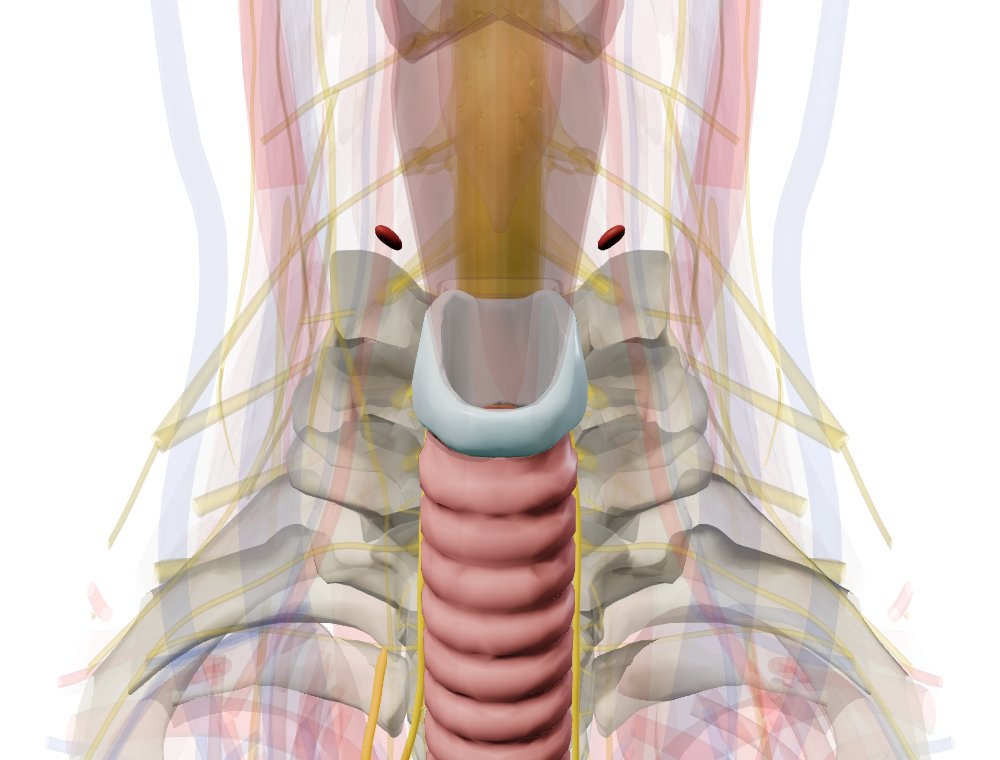
Through a cut of about 4 to 6 cm low in the front of the neck, in a skin crease, the neck muscles are moved aside. The surgeon removes the thyroid while protecting the nerves to the voice box, often checked with a nerve monitor, and the four tiny glands that control calcium (parathyroids). It usually takes one to two hours.
Anaesthesia and the hospital stay
You will be asleep (general anaesthesia). Most people stay in hospital one or two nights.
Possible risks
- Hoarse or weak voice from irritation of a voice nerve, usually temporary — about 3 to 5 in 100; permanent about 1 in 100
- Low calcium (tingling in fingers and lips) after removal of the whole gland, treated with tablets — about 1 in 5 for a short time; permanent about 1 to 2 in 100
- Bleeding in the neck in the first hours, which can press on the windpipe and needs a quick return to the operating room — about 1 to 2 in 100
- Wound infection — rare, less than 1 in 100
- Lifelong thyroid hormone tablets — always after removal of the whole gland; about 1 in 4 after removal of half
These figures are approximate. Your surgeon will tell you what applies to you.
After the operation
You may drink and eat the same evening. The neck feels stiff and swallowing is sore for a few days. Calcium levels are checked; tell the staff about any tingling. Most people return to office work after one to two weeks. The scar fades over months; protect it from the sun during the first year.
Questions people often ask
- Will my voice change?
- Most voices are normal. Some people notice that high notes or a loud voice tire sooner for a few weeks.
- When should I call the hospital?
- Straight away if the neck swells quickly or breathing becomes difficult; also with tingling or cramps in the hands or lips, fever, or a red, leaking wound.
The same explanation in 3D, step by step: what is broken or ill, how the operation is done, with the X-ray and a QR code to take home. Free.
See it in 3D →