 OpenDissect
Open belly operation (laparotomy)
Laparotomy · the cut and what to expect
The same explanation in 3D, step by step: what is broken or ill, how the operation is done, with the X-ray and a QR code to take home. Free.
See it in 3D →Types
- Up and down the middle
- Under the ribs
- Low and across (bikini line)
What is the problem
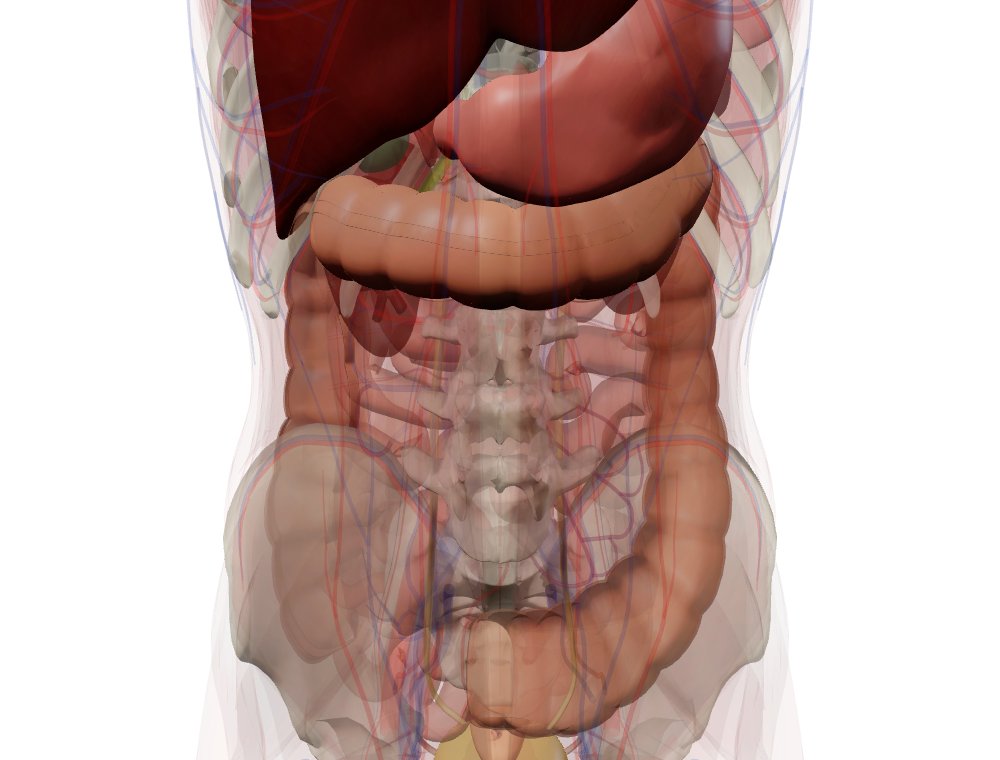
Some operations on the bowel, stomach, liver, large blood vessels or organs of the pelvis need a direct view and room for the surgeon's hands, for example in an emergency, with a large tumour or after many earlier operations. Then the belly is opened with a longer cut instead of keyhole surgery.
Why an operation
The reason for the operation depends on your illness, and your surgeon will explain it. The open cut lets the surgeon work safely, see everything, stop bleeding quickly and handle organs that are swollen, inflamed or stuck together.
How the operation is done
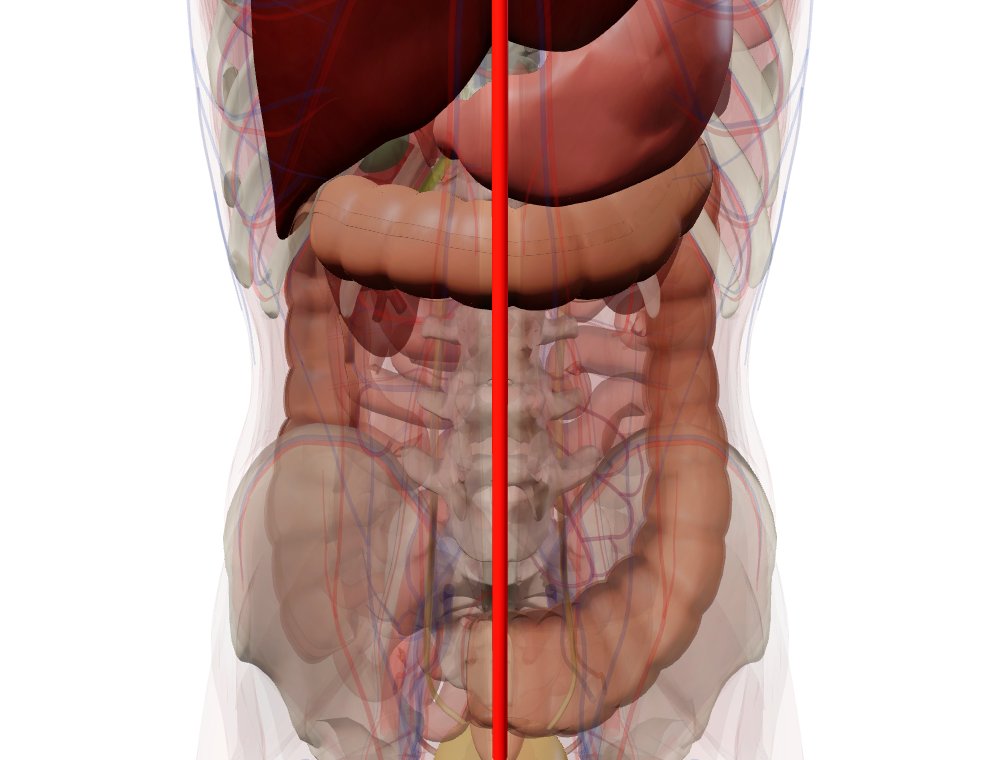
The skin, the fat and the strong layer of the belly wall are opened along the chosen line, and the inner lining is opened carefully to protect the bowel. After the main part of the operation, the belly wall is closed with a strong, slowly dissolving stitch, and the skin with stitches or clips. How long it takes depends on what is done inside.
Anaesthesia and the hospital stay
You will be asleep (general anaesthesia), often with a small tube in the back for pain relief (epidural) or a numbing injection in the belly wall. The stay is usually several days to a week or more, depending on the operation.
Possible risks
- Wound infection — about 5 to 10 in 100; more after emergency or bowel operations
- A hernia in the scar (incisional hernia) months or years later — about 1 in 10 for a cut down the middle; fewer for cuts across
- Chest infection; the breathing exercises help to prevent it — about 2 to 5 in 100
- The bowel is slow to start working again (nausea, bloating) — common for a few days
- Scar tissue inside the belly that later blocks the bowel — about 2 to 5 in 100
- The wound opens deep down (burst abdomen), needing another operation — about 1 to 2 in 100
- Blood clot in the leg or lung — about 1 in 100
These figures are approximate. Your surgeon will tell you what applies to you.
After the operation
You get up with help on the first day; moving, breathing exercises and early drinking and eating help you recover. Support the wound with a hand or a pillow when you cough. Avoid lifting heavy things for about six weeks so that the belly wall heals firmly. Most people need four to eight weeks to get back to normal.
Questions people often ask
- Why not keyhole surgery?
- Keyhole surgery is used whenever it is safe. Your surgeon will explain why the open way is better in your case.
- When should I call the hospital?
- If you get a fever, increasing belly pain, vomiting, if you cannot pass wind or stools, or if the wound becomes red, leaks or opens.
The same explanation in 3D, step by step: what is broken or ill, how the operation is done, with the X-ray and a QR code to take home. Free.
See it in 3D →