 OpenDissect
Neck disc operation: removing the disc and fusing (ACDF)
Anterior cervical discectomy and fusion
The same explanation in 3D, step by step: what is broken or ill, how the operation is done, with the X-ray and a QR code to take home. Free.
See it in 3D →What is the problem
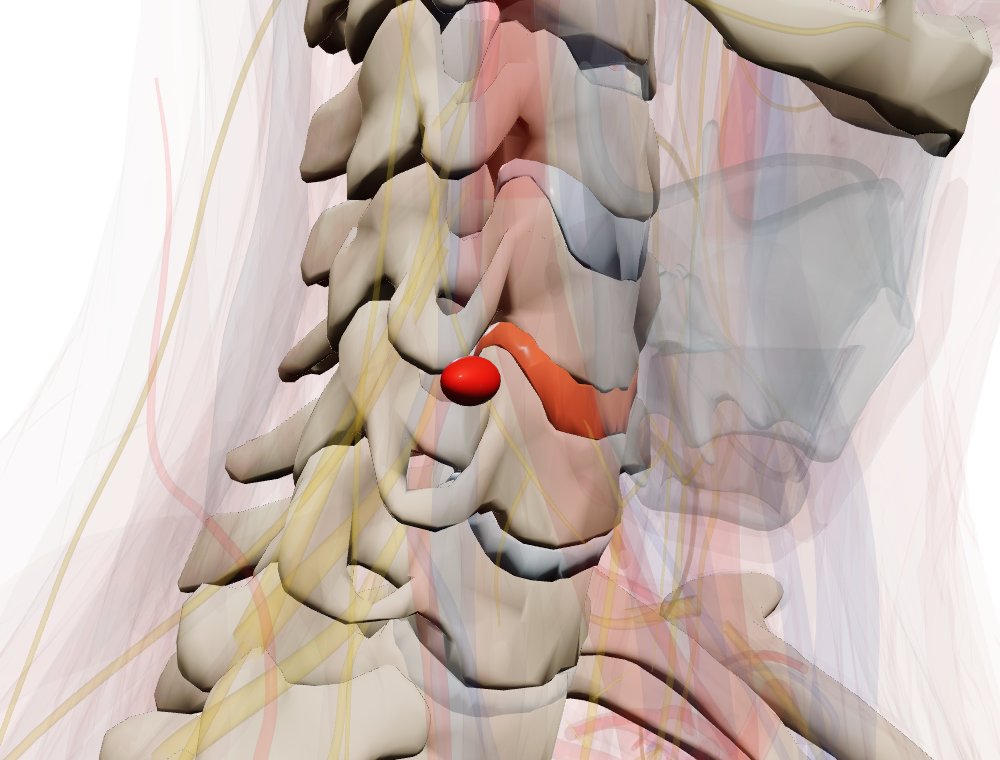
Between the bones of the neck lie soft cushions (discs). A disc can bulge, or bony spurs can grow, and press on a nerve root or on the spinal cord. This causes pain, tingling or weakness in the arm and hand, or, when the cord is squeezed, clumsy hands and unsteady walking.
Why an operation
Arm pain from a disc often settles within weeks with painkillers and physiotherapy. An operation is advised when pain persists for months, when weakness grows, or when the spinal cord is squeezed, to stop further damage. It relieves arm pain in most people; it is less reliable for neck pain alone.
How the operation is done
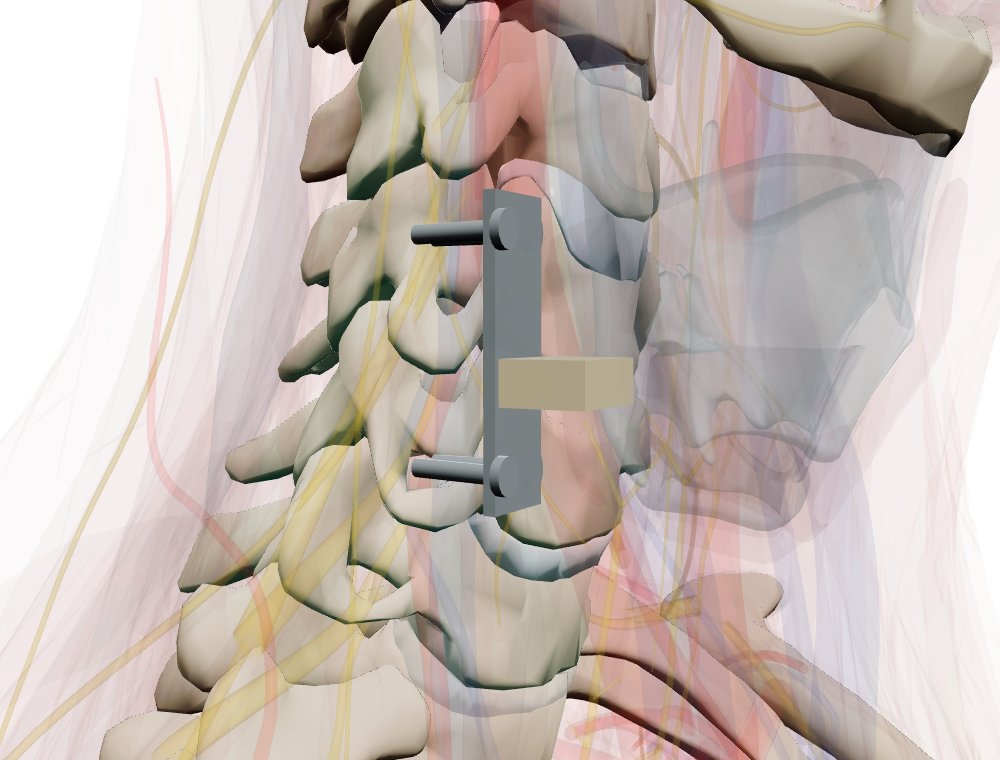
Through a short cut in a skin crease on the front of the neck, the windpipe and gullet are gently moved aside to reach the front of the spine. The damaged disc and spurs are removed under a microscope, freeing the nerve or the cord. A small spacer (cage) fills the space so the two bones grow together, often with a small plate and screws. It usually takes one to two hours.
Anaesthesia and the hospital stay
You will be asleep (general anaesthesia). Most people stay in hospital one or two nights.
Possible risks
- Difficulty or pain when swallowing for a few weeks — common, about 1 in 5 to 1 in 3; lasting about 1 to 2 in 100
- Hoarse voice from irritation of a voice nerve, usually temporary — about 2 to 5 in 100
- Bleeding in the neck that presses on the airway, needing a quick return to the operating room — rare, less than 1 in 100
- Injury to the spinal cord or a nerve root (new weakness) — rare, less than 1 in 100
- Wear of the neighbouring discs over the years, sometimes needing another operation — about 2 to 3 in 100 per year
These figures are approximate. Your surgeon will tell you what applies to you.
After the operation
You can usually walk, drink and eat the same day; soft food is easier at first. A soft collar is rarely needed. Avoid heavy lifting and contact sport for about six weeks. Arm pain often improves quickly; numbness and weakness recover more slowly over months. The bones grow together over about three months.
Questions people often ask
- Will my neck be stiff?
- Fusing one level hardly changes how far you can turn your head.
- When should I call the hospital?
- Straight away if the neck swells quickly or breathing becomes difficult, or with new weakness of the arms or legs; also with fever or a red, leaking wound.
The same explanation in 3D, step by step: what is broken or ill, how the operation is done, with the X-ray and a QR code to take home. Free.
See it in 3D →