 OpenDissect
Narrowed neck artery: cleaning it out (carotid endarterectomy)
Carotid stenosis · open operation in the neck
The same explanation in 3D, step by step: what is broken or ill, how the operation is done, with the X-ray and a QR code to take home. Free.
See it in 3D →What is the problem
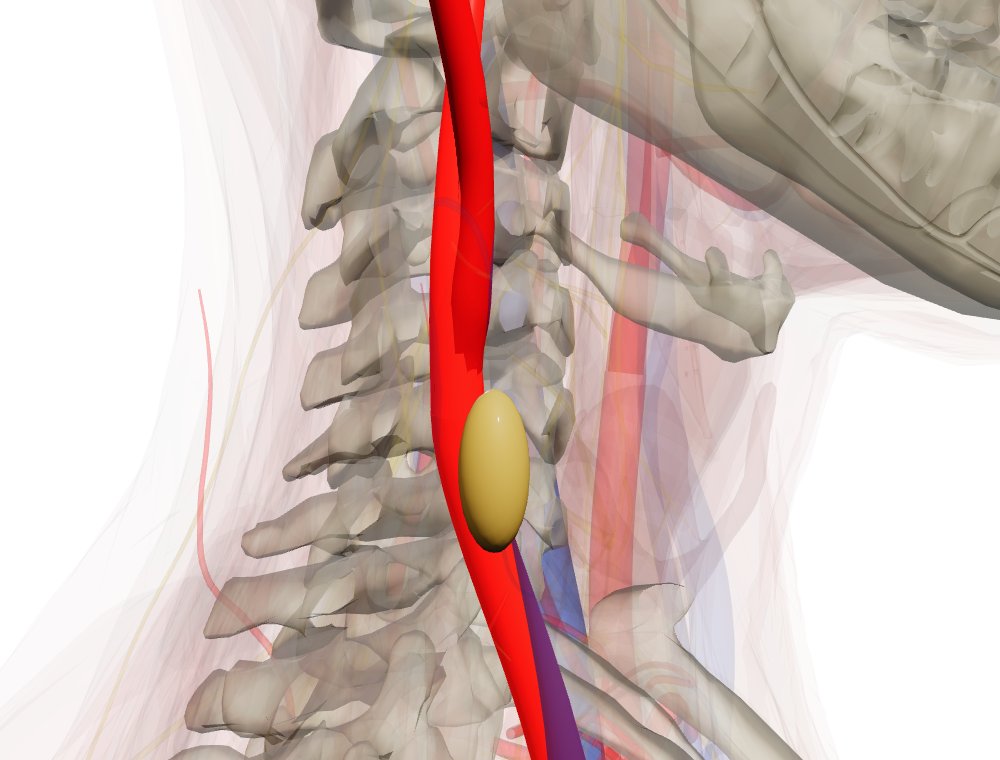
The carotid arteries in the neck carry blood to the brain. A fatty, hardened deposit (plaque) can build up where the artery divides and narrow it. Small pieces can break off and travel to the brain, causing a mini-stroke (short loss of vision, speech or strength) or a stroke.
Why an operation
If the narrowing has already caused symptoms, removing the plaque soon (ideally within two weeks) clearly lowers the risk of a stroke. Without symptoms, an operation helps only selected people with a tight narrowing; medicines (blood thinner, cholesterol and blood pressure treatment) are always part of the treatment. A stent is an alternative for some.
How the operation is done
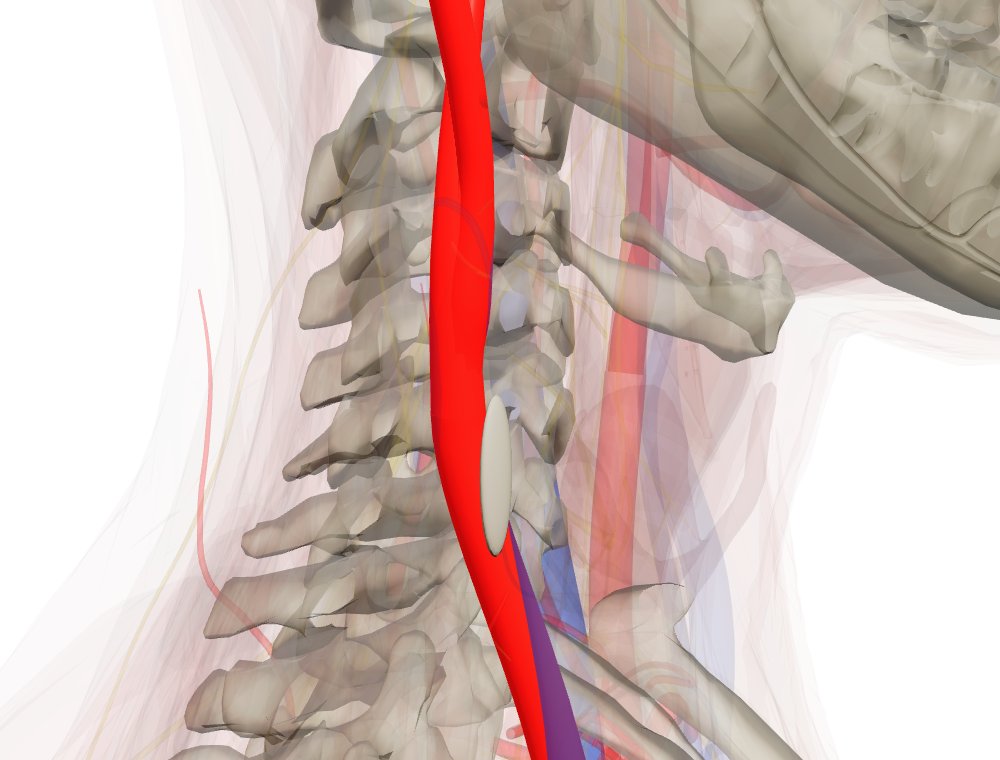
Through a cut along the front edge of the large neck muscle, the artery is freed and clamped for a short time, while the brain gets blood from the other side or through a small temporary tube (shunt). The artery is opened, the plaque is peeled out, and the artery is closed, often with a small patch to widen it. It usually takes one and a half to two hours.
Anaesthesia and the hospital stay
It is done asleep (general anaesthesia) or awake with the neck numbed, so the team can talk with you during the clamping. Most people stay in hospital two to three days.
Possible risks
- Stroke or death around the time of the operation — about 2 to 4 in 100 after symptoms; lower without symptoms
- Weakness of the tongue, hoarseness or difficulty swallowing from irritation of a nerve, mostly temporary — about 2 to 5 in 100
- Bleeding or swelling in the neck needing a return to the operating room — about 1 to 3 in 100
- Heart attack — about 1 in 100
- Numb skin around the scar and the earlobe — common, often improves
- Headache or high blood pressure from the restored blood flow — uncommon; the blood pressure is closely watched
These figures are approximate. Your surgeon will tell you what applies to you.
After the operation
You are watched closely for the first hours. You can usually eat and walk the next day. Keep taking your blood thinner and cholesterol tablets, stop smoking and keep the blood pressure under control: these protect both arteries. Avoid driving for about two weeks or as advised. A check-up ultrasound is usually done after some months.
Questions people often ask
- Can the narrowing come back?
- Rarely, in a few in 100 over the years; the tablets and a healthy lifestyle lower this risk.
- When should I call the hospital?
- Call the emergency number at once with any new weakness, numbness, drooping face, trouble speaking or seeing (signs of a stroke), or if the neck swells quickly or breathing becomes difficult.
The same explanation in 3D, step by step: what is broken or ill, how the operation is done, with the X-ray and a QR code to take home. Free.
See it in 3D →