 OpenDissect
Lisfranc injury (midfoot): fixing it with screws and plates
Lisfranc injury · screws and plates
The same explanation in 3D, step by step: what is broken or ill, how the operation is done, with the X-ray and a QR code to take home. Free.
See it in 3D →Types
- All the long foot bones shifted
- Some foot bones shifted
What is broken
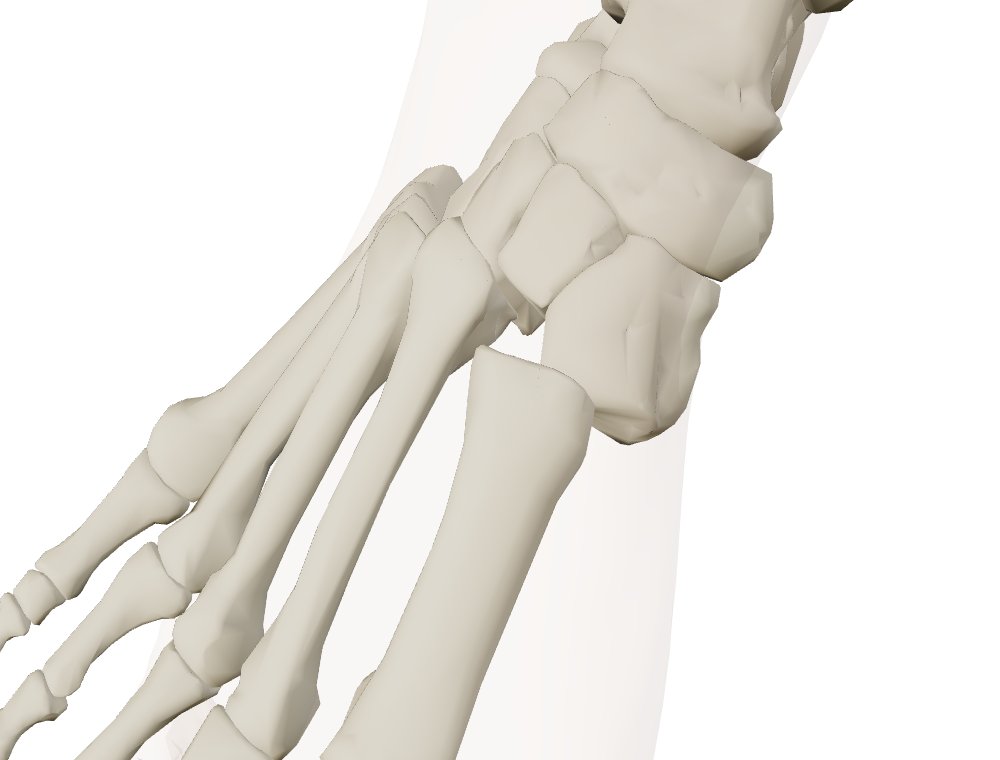
In the middle of the foot, the long foot bones (metatarsals) join the small bones of the midfoot. A strong ligament (Lisfranc ligament) holds the second one in place. A twist on a pointed foot, a fall or a crush can tear it or break the bones, so the foot bones shift and the arch becomes unstable. It is easily missed on a first X-ray.
Why an operation
If the bones stay shifted, the arch collapses and the midfoot wears out painfully. Putting them back exactly and holding them while the ligament heals gives the best chance of a stable, pain-free foot.
How the operation is done
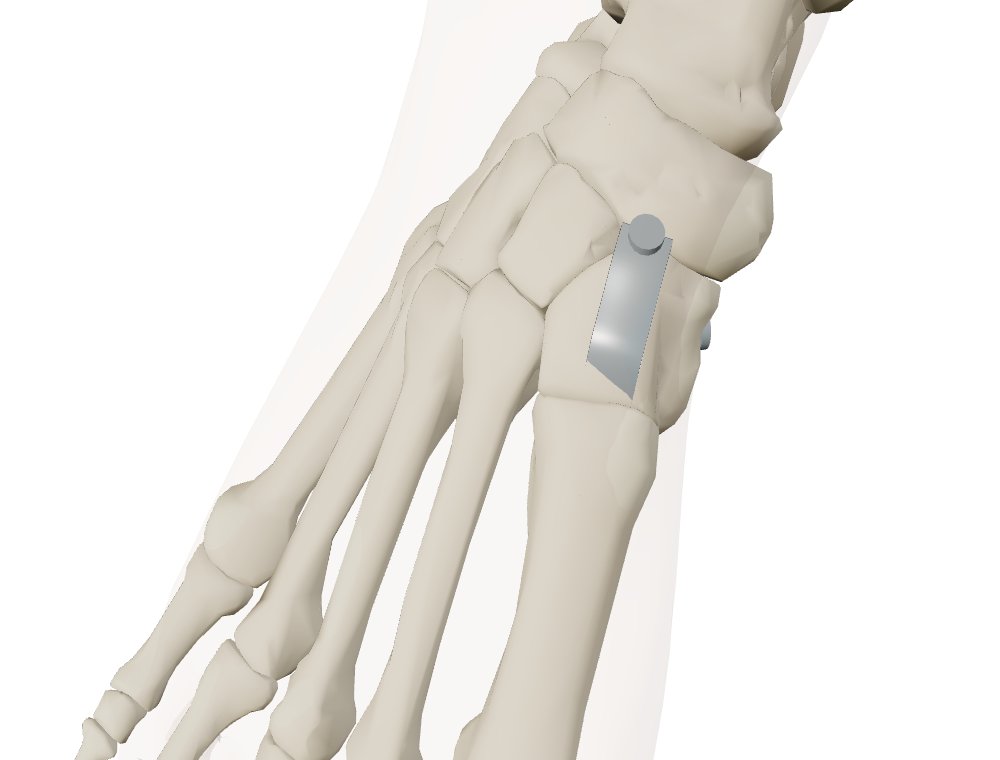
Through one or two cuts on the top of the foot, the surgeon puts the bones back in line and holds them with screws and small plates, sometimes also with wires on the outer side. In some injuries the joints are fused on purpose. It usually takes one and a half to two hours.
Anaesthesia and the hospital stay
You will be asleep (general anaesthesia) or numb from the waist down (spinal anaesthesia). Most people stay in hospital a few days.
Possible risks
- Wear of the joint (arthritis) in later years — fairly common over the years, even after a good operation
- The metal bothers or breaks and is removed later — fairly common; some surgeons plan its removal
- Wound infection — about 2 to 5 in 100
- Numbness on the top of the foot — about 2 to 5 in 100
- Prolonged pain, swelling and stiffness (complex regional pain syndrome) — about 1 to 3 in 100
- Blood clot in the leg or lung — about 1 in 100
These figures are approximate. Your surgeon will tell you what applies to you.
After the operation
Keep the foot raised in the first weeks. You do not put weight on the foot for about six weeks, then gradually in a boot. Insoles that support the arch help afterwards. Recovery takes about a year.
Questions people often ask
- Does the metal have to come out?
- No, it can stay for life. It is removed only if it bothers you, usually not before a year.
- When should I call the hospital?
- If the wound gets red, warm or leaks, if you get a fever, if pain or swelling suddenly get worse, if the foot becomes numb or cold, or if the calf swells and hurts.
The same explanation in 3D, step by step: what is broken or ill, how the operation is done, with the X-ray and a QR code to take home. Free.
See it in 3D →