 OpenDissect
Hip fracture: fixing it with a screw and plate
Broken hip (below the neck) · sliding hip screw
The same explanation in 3D, step by step: what is broken or ill, how the operation is done, with the X-ray and a QR code to take home. Free.
See it in 3D →Types
- Stable: two pieces
What is broken
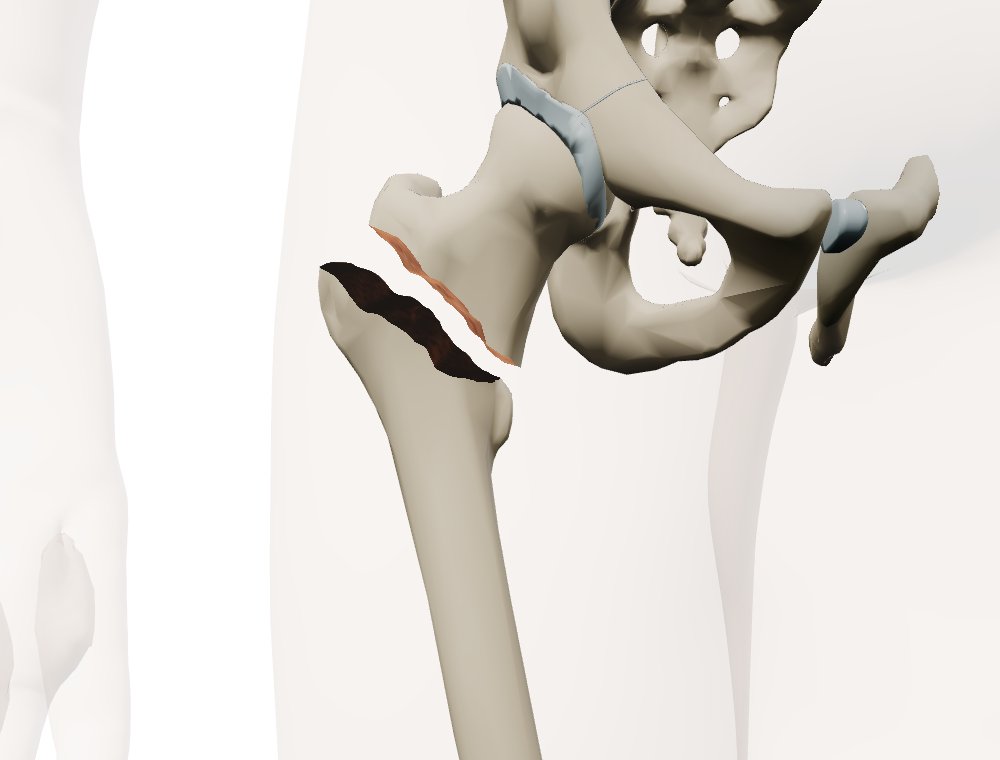
The thigh bone (femur) has broken just below the neck of the hip, through the bony bumps where the big hip muscles attach. In your case the break is in two pieces and stable. This fracture is common after a fall, especially when the bones have become thinner with age.
Why an operation
Without an operation the pieces slip, the leg becomes shorter and turned out, and lying in bed for weeks brings pneumonia, clots and bedsores. Fixing the bone lets you stand up and walk again in the first days. For stable fractures like yours, a screw with a side plate works as well as a nail.
How the operation is done
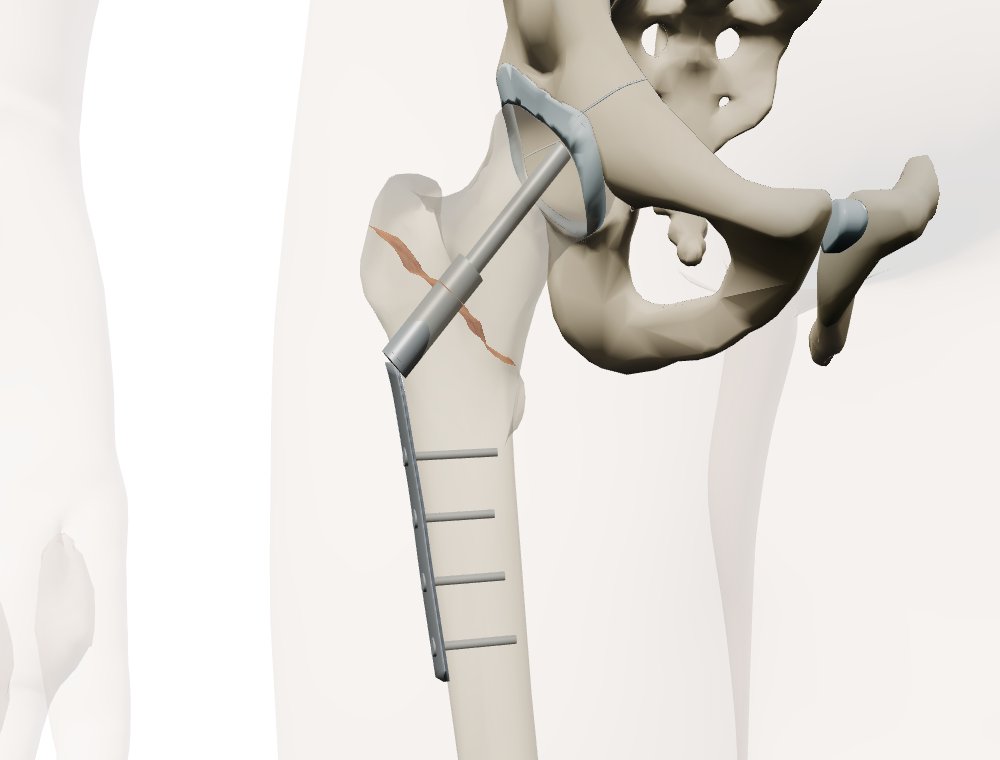
The leg is placed on a special table and the pieces are put back in place under X-ray. Through a cut on the outer side of the thigh, a large screw is placed up through the neck into the ball of the hip. It slides inside a short tube on a plate, which is fixed to the side of the thigh bone with screws. The sliding lets the pieces press together as you walk. It usually takes about an hour.
Anaesthesia and the hospital stay
You will be asleep (general anaesthesia) or numb from the waist down (spinal anaesthesia). Most people stay in hospital about a week, then go home or to a rehabilitation clinic.
Possible risks
- Needing a blood transfusion — fairly common, about 1 in 5
- Short-lived confusion (delirium), mostly in older people — about 1 in 4
- Wound infection — about 1 to 2 in 100
- Serious general illness (heart, lungs) that can be life-threatening, mainly in frail people — not rare after a hip fracture; your doctor will discuss your own risk
- Blood clot in the leg or lung — about 1 in 100, despite the injections that prevent it
- The screw cuts out of the ball, or the bone does not heal: a second operation — about 2 to 5 in 100
These figures are approximate. Your surgeon will tell you what applies to you.
After the operation
You may usually put full weight on the leg straight away, with a walking frame or crutches at first. The physiotherapist starts on day one. The leg may become a little shorter as the screw slides; this is expected. The stitches or clips come out after about two weeks, and the bone takes about three months to heal. The metal normally stays in for life.
Questions people often ask
- Will I walk again?
- Most people walk again, many with a stick for some time. Being active before the fall is the best predictor.
- Why a plate and not a nail?
- For stable fractures both work equally well. Your surgeon chooses according to the shape of the break and experience.
- When should I call the hospital?
- If the wound gets red, warm or leaks, if you get a fever, or if the leg suddenly hurts more, swells or you cannot stand on it.
The same explanation in 3D, step by step: what is broken or ill, how the operation is done, with the X-ray and a QR code to take home. Free.
See it in 3D →