 OpenDissect
Hip arthritis: a new hip joint
Total hip replacement · arthritis
The same explanation in 3D, step by step: what is broken or ill, how the operation is done, with the X-ray and a QR code to take home. Free.
See it in 3D →What is the problem
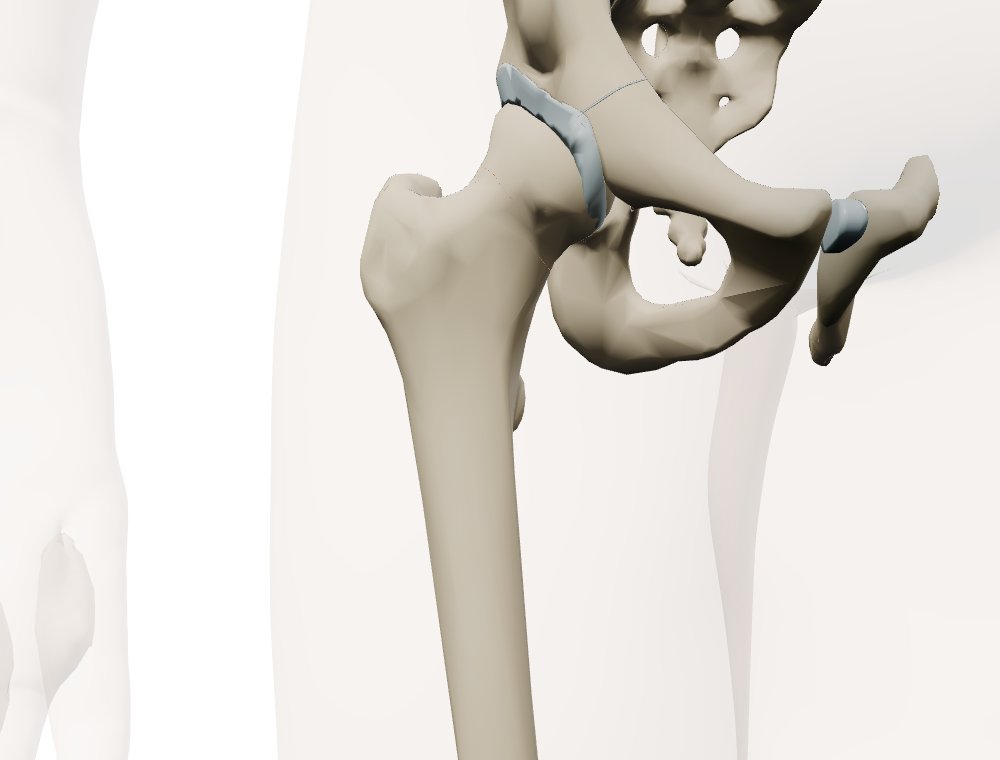
The hip is a ball-and-socket joint. Both surfaces are covered with smooth cartilage. In arthritis this cartilage wears away, so bone rubs on bone. This causes pain in the groin or thigh, stiffness, and a limp that slowly get worse.
Why an operation
An operation is considered when pain limits walking, sleep or daily life despite painkillers, physiotherapy, weight loss and walking aids. It is a planned operation: you decide together with your surgeon when the time is right. A new hip relieves pain in more than 9 out of 10 people.
How the operation is done
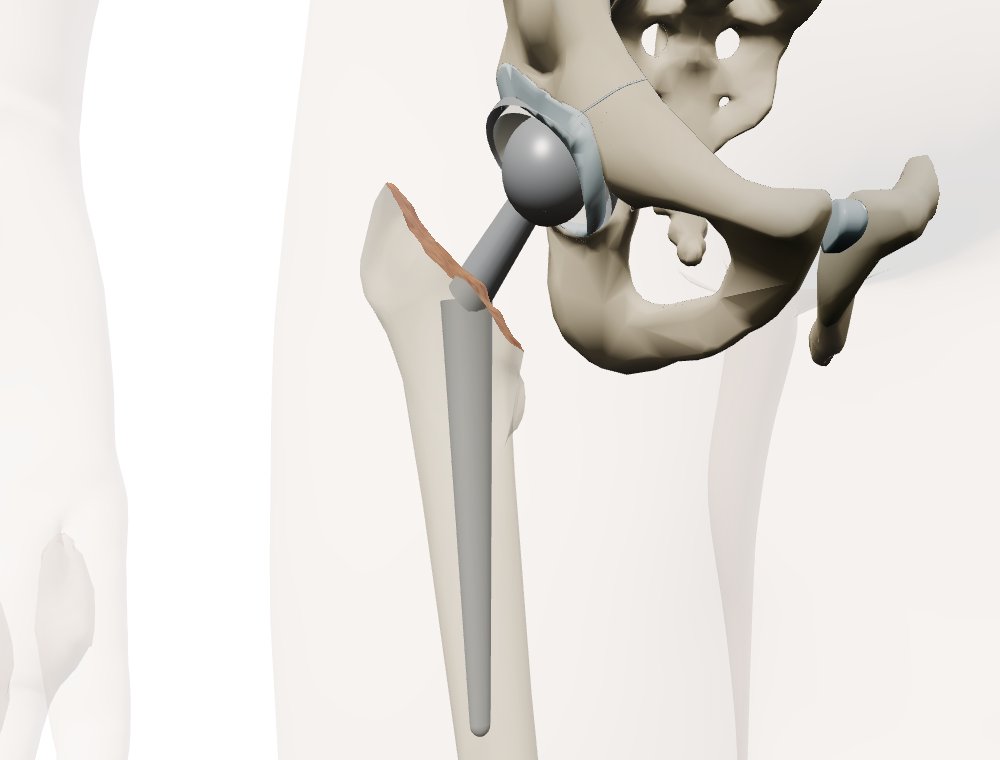
Through a cut over the side, the front or the back of the hip, the surgeon removes the worn ball of the thigh bone. The socket in the pelvis is shaped and fitted with a metal cup with a smooth liner. A metal stem goes into the thigh bone and carries a new ball. The parts are fixed by bone growing onto them or with bone cement. It usually takes one to two hours.
Anaesthesia and the hospital stay
You will be numb from the waist down (spinal anaesthesia) or asleep (general anaesthesia). Most people stay in hospital three to six days; some then go to a rehabilitation clinic.
Possible risks
- Dislocation: the new ball slips out of the socket — about 1 to 2 in 100, mostly in the first months
- Infection of the new joint, which usually needs further operations — about 1 in 100
- Blood clot in the leg or lung — about 1 in 100, despite the medicine that prevents it
- Fracture of the bone around the implant — about 1 in 100
- A difference in leg length — possible; usually small and not noticeable
- Nerve injury (numbness or weakness of the foot) — rare, less than 1 in 100
- Loosening or wear years later, needing a new operation — about 5 to 10 in 100 after 15 to 20 years
These figures are approximate. Your surgeon will tell you what applies to you.
After the operation
You stand up with help on the day of the operation or the next day and may usually put full weight on the leg, with crutches at first. The physiotherapist shows you how to move safely. Most people walk without crutches after four to six weeks and drive again after about six weeks. Full recovery takes three to six months.
Questions people often ask
- How long will the new hip last?
- In about 9 out of 10 people it still works well after 15 to 20 years.
- Can I do sport again?
- Yes: walking, cycling, swimming, hiking and golf are good. Avoid sports with jumping and hard knocks.
- When should I call the hospital?
- If the wound gets red, warm or leaks, if you get a fever, if the leg suddenly looks shorter or turned, or if the calf swells and hurts.
The same explanation in 3D, step by step: what is broken or ill, how the operation is done, with the X-ray and a QR code to take home. Free.
See it in 3D →