 OpenDissect
Heart bypass operation (CABG)
Coronary artery bypass · open heart surgery through the breastbone
The same explanation in 3D, step by step: what is broken or ill, how the operation is done, with the X-ray and a QR code to take home. Free.
See it in 3D →What is the problem
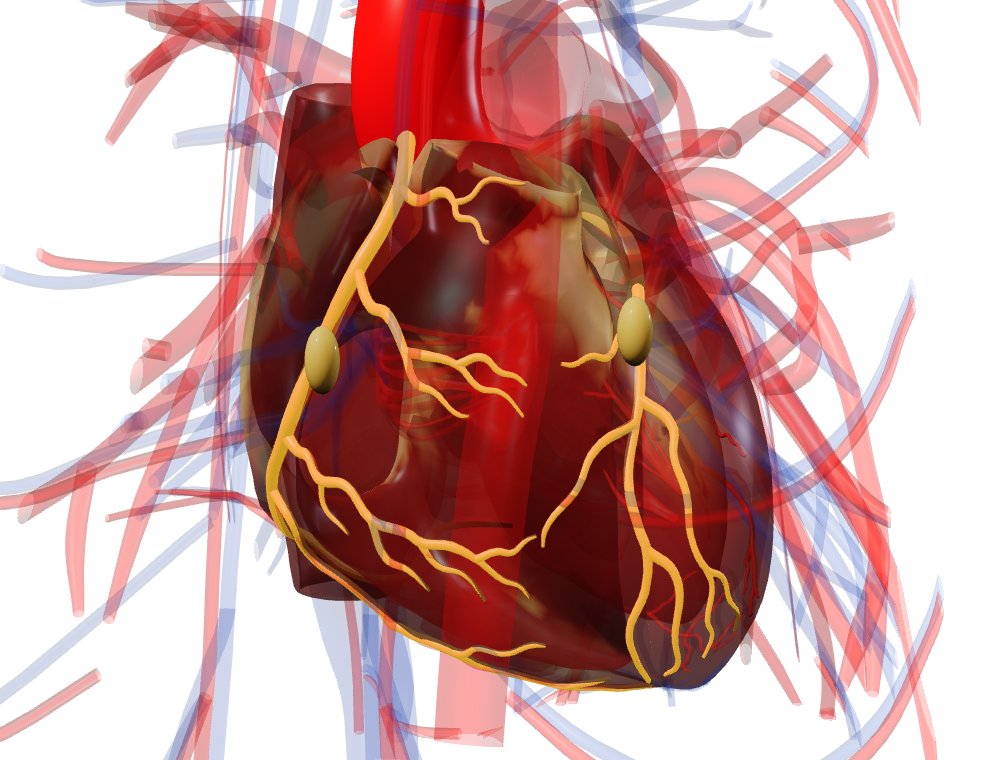
The heart muscle gets its blood from the coronary arteries. Fatty deposits can narrow them, so the heart gets too little blood when it works harder: this causes chest pain or breathlessness on effort (angina) and can lead to a heart attack.
Why an operation
When several main arteries are narrowed, especially with diabetes or a weaker heart, a bypass operation often helps more and for longer than stents. The heart team (cardiologist and heart surgeon) looks at your pictures together and recommends the best treatment for you.
How the operation is done
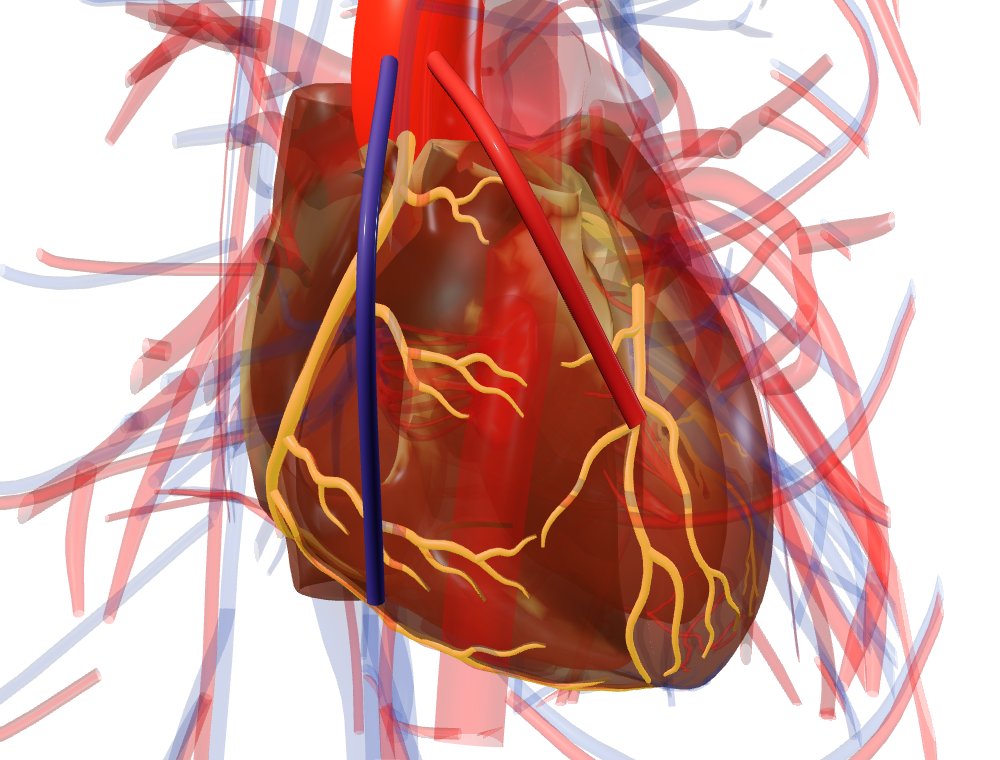
Through a cut down the middle of the chest, the breastbone is divided. Blood vessels are taken from inside the chest wall (an artery), and often from the leg (a vein) or the forearm. They are sewn from the main artery or the chest-wall artery to the heart arteries beyond the narrowings, so blood flows around them. A heart-lung machine usually takes over while the heart is still. The breastbone is closed with steel wires. It takes three to five hours.
Anaesthesia and the hospital stay
You will be asleep (general anaesthesia) and wake up in intensive care, usually the same day or the next morning, still with a breathing tube for a short time. Most people stay in hospital about one week, followed by cardiac rehabilitation.
Possible risks
- Irregular heartbeat (atrial fibrillation), treated with medicines — common, about 1 in 4 to 1 in 3, usually temporary
- Bleeding needing a blood transfusion or a return to the operating room — about 2 to 5 in 100
- Infection of the breastbone wound — about 1 to 2 in 100; more with diabetes or obesity
- Stroke — about 1 to 2 in 100
- Kidney problems, rarely needing temporary dialysis — about 1 to 3 in 100
- Death related to the operation — about 1 to 2 in 100 for a planned operation; your team will estimate your own risk
- Short-lived confusion or poor memory — fairly common in older people; usually improves
These figures are approximate. Your surgeon will tell you what applies to you.
After the operation
You sit in a chair and walk with help within a day or two. The breastbone takes about six to eight weeks to heal: do not lift more than a few kilos, push or pull hard, or drive during this time. Cardiac rehabilitation helps you regain strength. Taking your medicines, stopping smoking and a healthy lifestyle keep the bypasses open for many years.
Questions people often ask
- How long do the bypasses last?
- The chest-wall artery bypass usually stays open for decades; vein bypasses last on average 10 to 15 years.
- When should I call the hospital?
- If the chest wound becomes red, leaks or the breastbone clicks, if you get a fever, breathlessness, a fast irregular heartbeat, or swelling of the leg; call the emergency number for chest pain like before the operation.
The same explanation in 3D, step by step: what is broken or ill, how the operation is done, with the X-ray and a QR code to take home. Free.
See it in 3D →