 OpenDissect
Groin hernia: keyhole repair with a mesh (TAPP)
Inguinal hernia · keyhole mesh repair
The same explanation in 3D, step by step: what is broken or ill, how the operation is done, with the X-ray and a QR code to take home. Free.
See it in 3D →Types
- Indirect hernia (through the inguinal canal)
- Direct hernia (through the weak back wall)
What is the problem
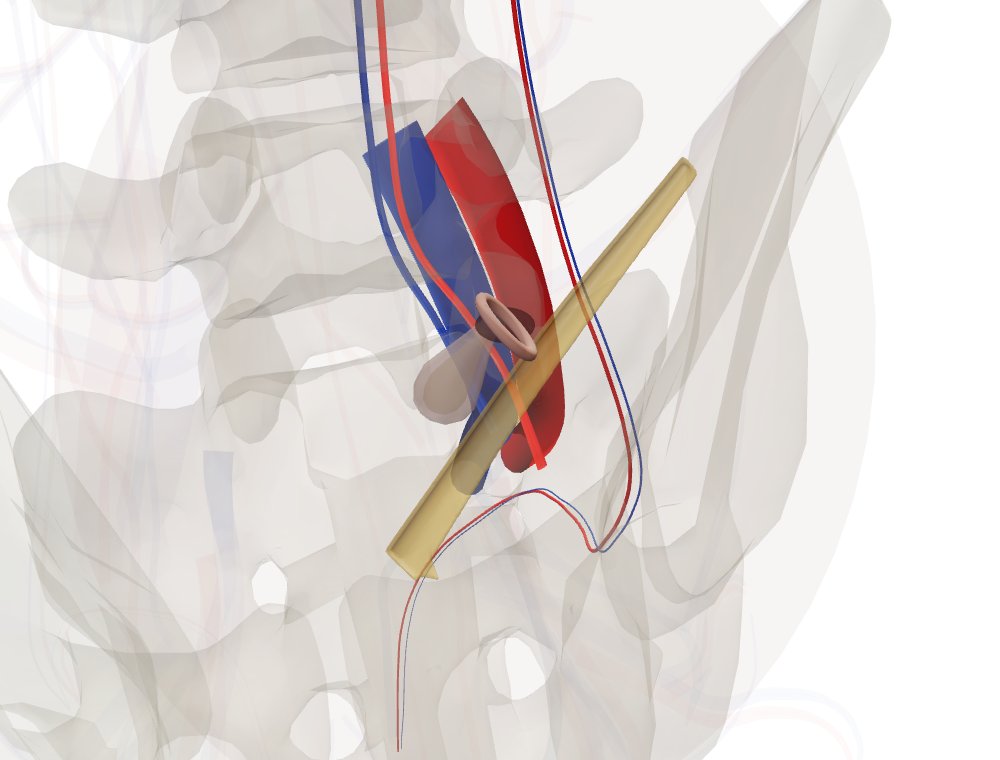
In the groin the belly wall has a natural weak spot. A hernia is a pouch of the inner lining of the belly, often with fat or bowel inside, that pushes through it. It shows as a bulge that grows when you cough, stand or lift, and goes back when you lie down.
Why an operation
A hernia does not close by itself and usually grows. Rarely bowel gets trapped in it, which is painful and an emergency. Keyhole repair is especially useful for hernias on both sides, a hernia that has come back after open repair, and in women; recovery is often a little faster than after open repair.
How the operation is done
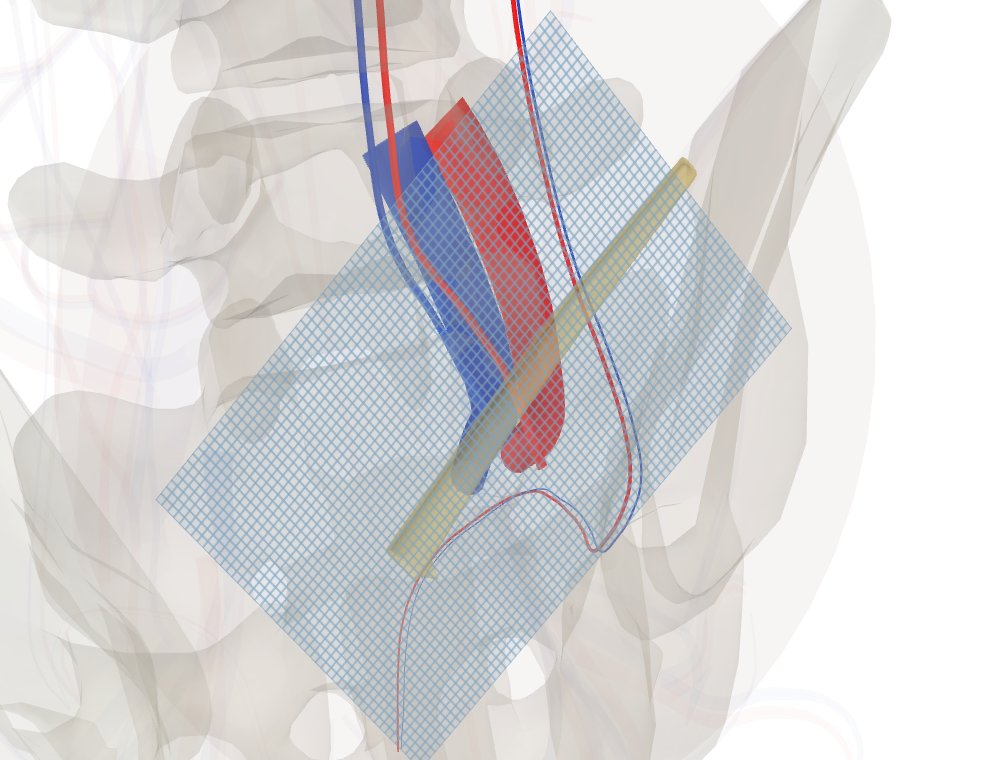
Through three small cuts, one at the navel, the belly is filled with gas and a camera and fine instruments are put in. From the inside, the lining is opened over the groin, the hernia is pulled back, and a mesh of about 15 by 10 cm is laid behind the muscles, covering all the weak spots. The lining is closed over it. It usually takes about an hour.
Anaesthesia and the hospital stay
You will be asleep (general anaesthesia). Many people go home the same day or the next day.
Possible risks
- Bruising or a fluid collection (seroma) in the groin — fairly common; usually goes away by itself
- Groin pain that lasts longer than three months — about 5 in 100, mostly mild
- The hernia comes back — about 1 to 3 in 100
- Difficulty passing urine right after the operation — about 2 to 5 in 100
- Injury to the bowel, bladder or a large vessel — rare, less than 1 in 100
- A hernia at one of the small cuts — about 1 in 100
These figures are approximate. Your surgeon will tell you what applies to you.
After the operation
You may walk the same day and eat normally. The small wounds and the shoulder (from the gas) hurt for a few days; normal painkillers help. Let the pain guide you: most people return to everyday activities within a week, and to sport and heavy work after two to three weeks.
Questions people often ask
- Does the mesh stay in my body?
- Yes, for life. It is made to stay and is normally not felt.
- When should I call the hospital?
- If you get a fever, increasing belly pain or vomiting, if a wound becomes red or leaks, if the groin swells a lot, or if you cannot pass urine.
The same explanation in 3D, step by step: what is broken or ill, how the operation is done, with the X-ray and a QR code to take home. Free.
See it in 3D →