 OpenDissect
Compartment syndrome: releasing the pressure in the leg (fasciotomy)
Fasciotomy · emergency operation
The same explanation in 3D, step by step: what is broken or ill, how the operation is done, with the X-ray and a QR code to take home. Free.
See it in 3D →What is the problem
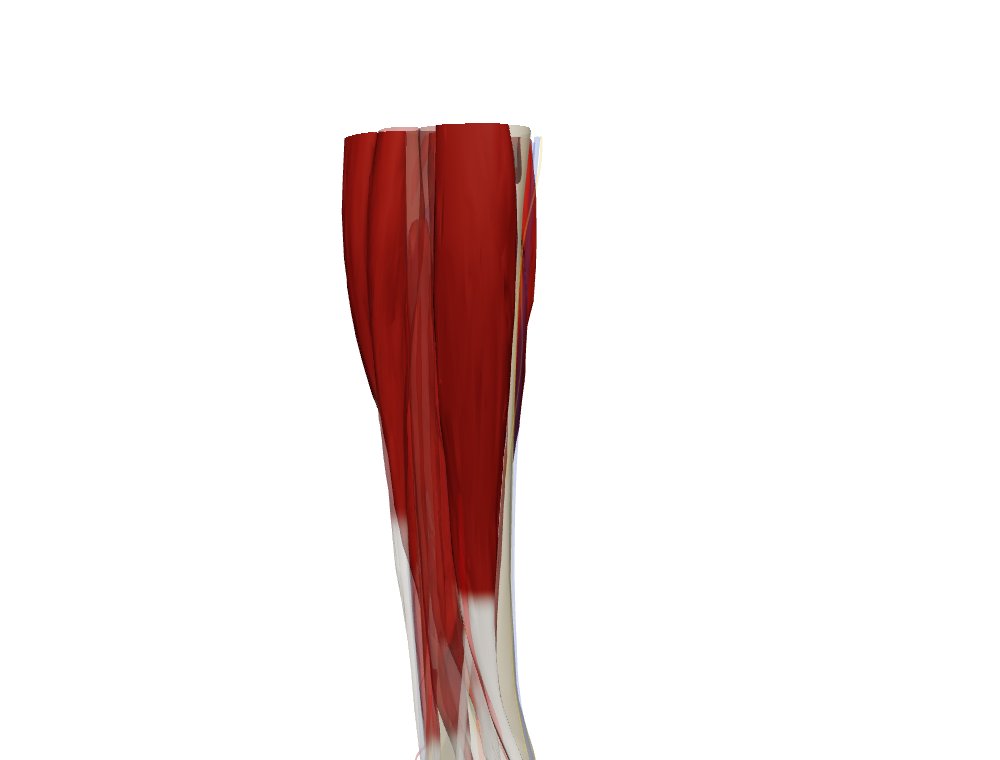
The muscles of the lower leg lie in four compartments wrapped in tough, unstretchable tissue (fascia). After a fracture, a crush injury or when blood flow returns after a blocked artery, the muscles can swell so much that the pressure inside cuts off their own blood supply. This causes severe pain, worse when the toes are moved, and later numbness. The same can happen in the forearm.
Why an operation
This is an emergency. Within a few hours the muscles and nerves can be permanently damaged, leaving a weak, numb or stiff foot. The only effective treatment is to open the tight fascia quickly so the muscles can swell freely and blood can flow again.
How the operation is done
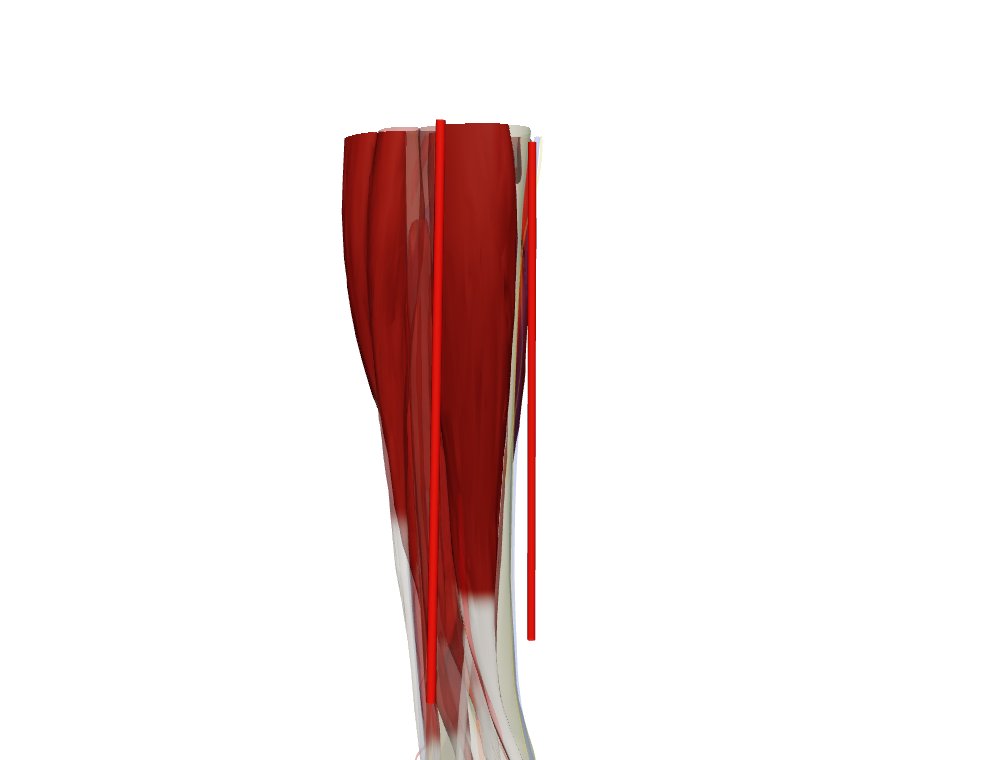
Two long cuts are made along the outer and the inner side of the lower leg, and the fascia of all four compartments is opened along its length. Any dead muscle is removed. The wounds are left open, covered with a special dressing, often with gentle suction. If there is a fracture, it is fixed at the same time. It usually takes about an hour.
Anaesthesia and the hospital stay
You will be asleep (general anaesthesia). You stay in hospital until the wounds are closed, usually one to two weeks.
Possible risks
- Further operations to clean and close the wounds, often with a skin graft — almost always; a skin graft in about 1 in 2
- Lasting weakness, numbness or stiffness of the foot or toes — depends on how long the pressure was high; more likely if the operation was late
- Wound infection — about 5 to 10 in 100
- Large, visible scars — always
These figures are approximate. Your surgeon will tell you what applies to you.
After the operation
The leg is kept raised. After two to five days the wounds are checked in the operating room, cleaned, and closed when the swelling has gone down, either with stitches or a skin graft. Physiotherapy keeps the ankle and toes moving. Walking depends on any fracture. Recovery takes weeks to months.
Questions people often ask
- Why are the wounds left open?
- Closing them at once would bring the pressure back. They are closed once the swelling has settled.
- When should I call the hospital?
- After discharge: if the wounds or grafts become red, smell or leak, if you get a fever, or if the calf swells and hurts.
The same explanation in 3D, step by step: what is broken or ill, how the operation is done, with the X-ray and a QR code to take home. Free.
See it in 3D →