 OpenDissect
Carpal tunnel syndrome: releasing the nerve at the wrist
Carpal tunnel release · small operation
The same explanation in 3D, step by step: what is broken or ill, how the operation is done, with the X-ray and a QR code to take home. Free.
See it in 3D →What is the problem
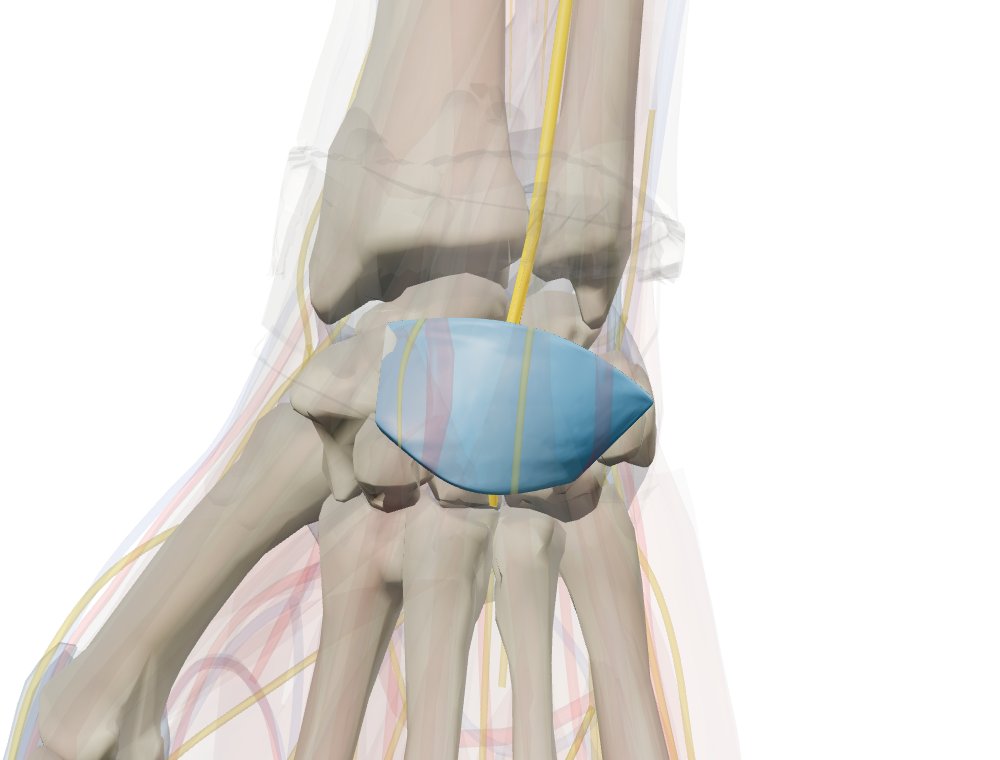
At the wrist, the median nerve runs with the finger tendons through a narrow tunnel, roofed by a tough ligament. When the nerve is squeezed there, the thumb, index and middle fingers tingle or go numb, often at night or when holding a phone or a steering wheel. Later the hand becomes clumsy and the thumb muscles weaken.
Why an operation
A night splint or an injection can help mild cases. When symptoms continue, are severe, or the nerve test shows damage, dividing the ligament gives the nerve room. Night pain and tingling usually improve quickly; the operation helps about 9 out of 10 people.
How the operation is done
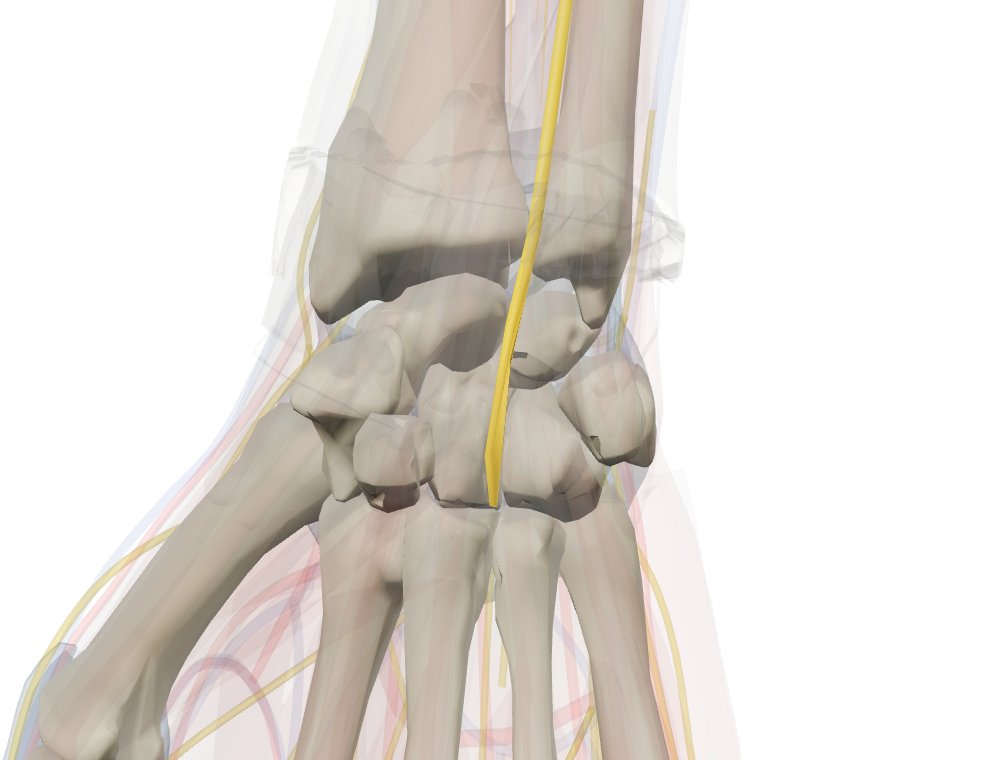
Through a short cut in the palm, near the wrist, the surgeon divides the ligament that forms the roof of the tunnel, taking care of the nerve beneath. The ligament heals later in a longer position, leaving more room. Sometimes it is done through a tiny cut with a camera. It takes about 15 to 20 minutes.
Anaesthesia and the hospital stay
It is usually done with local anaesthesia or with only the arm numbed, and you go home the same day.
Possible risks
- Tender scar and 'pillar pain' at the base of the palm when leaning on the hand — common for some weeks to months
- Symptoms not fully gone, especially numbness of long standing — about 1 in 10
- Wound infection — about 1 to 2 in 100
- Prolonged pain, swelling and stiffness (complex regional pain syndrome) — about 1 to 3 in 100
- Injury to the nerve or one of its branches — rare, less than 1 in 100
These figures are approximate. Your surgeon will tell you what applies to you.
After the operation
Move the fingers from the start and keep the hand raised for a few days. A bandage is worn for a few days; the stitches come out after about two weeks. Light use is fine at once; avoid heavy gripping for about four weeks. Strength returns over a few months.
Questions people often ask
- Can both hands be done?
- Yes, usually one after the other, a few weeks apart, so you always have one good hand.
- When should I call the hospital?
- If the wound becomes red, warm, swollen or leaks, if you get a fever, or if the fingers become numb, cold or very swollen.
The same explanation in 3D, step by step: what is broken or ill, how the operation is done, with the X-ray and a QR code to take home. Free.
See it in 3D →