 OpenDissect
Broken top of the shin bone (knee): fixing it with a plate
Tibial plateau fracture · plate and screws
The same explanation in 3D, step by step: what is broken or ill, how the operation is done, with the X-ray and a QR code to take home. Free.
See it in 3D →Types
- Outer side, split and pushed down
- Outer side, split only
- Both sides broken
What is broken
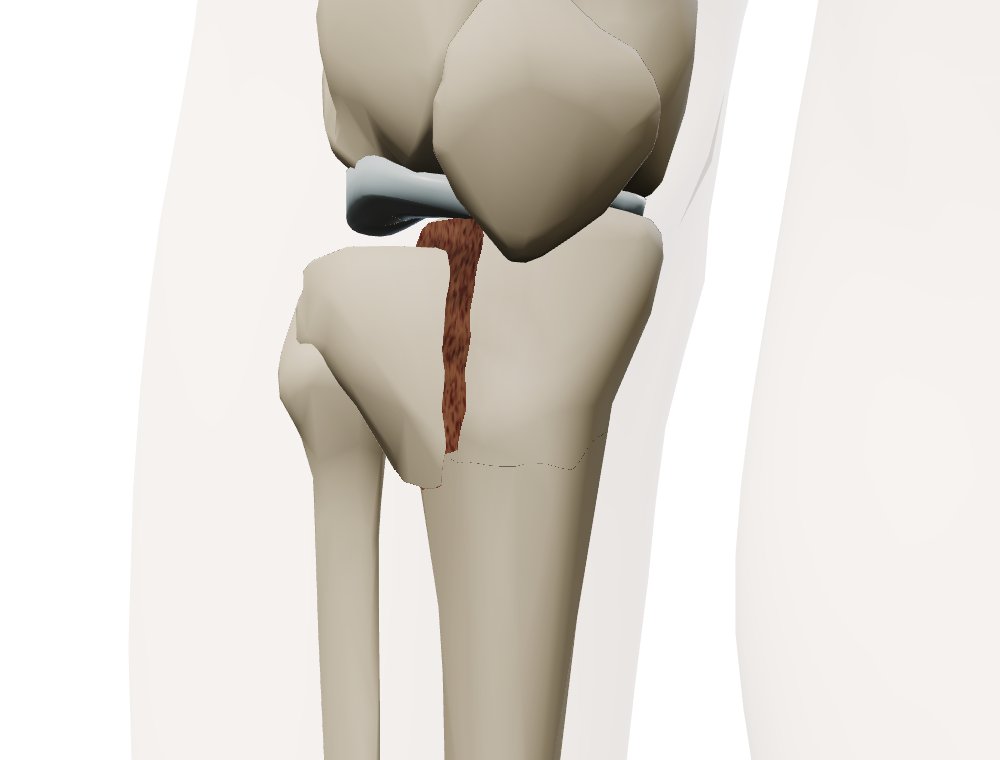
The top of the shin bone (tibial plateau) forms the lower half of the knee joint. It breaks in falls, skiing or road accidents. Often the outer side splits and part of the joint surface is pushed down, so the knee becomes unstable and may bend inwards.
Why an operation
A step in the joint surface or a tilted knee leads to instability and early wear. Lifting the pushed-down surface back up and holding it with a plate restores the joint and lets you move the knee early. Undisplaced breaks can heal without an operation.
How the operation is done
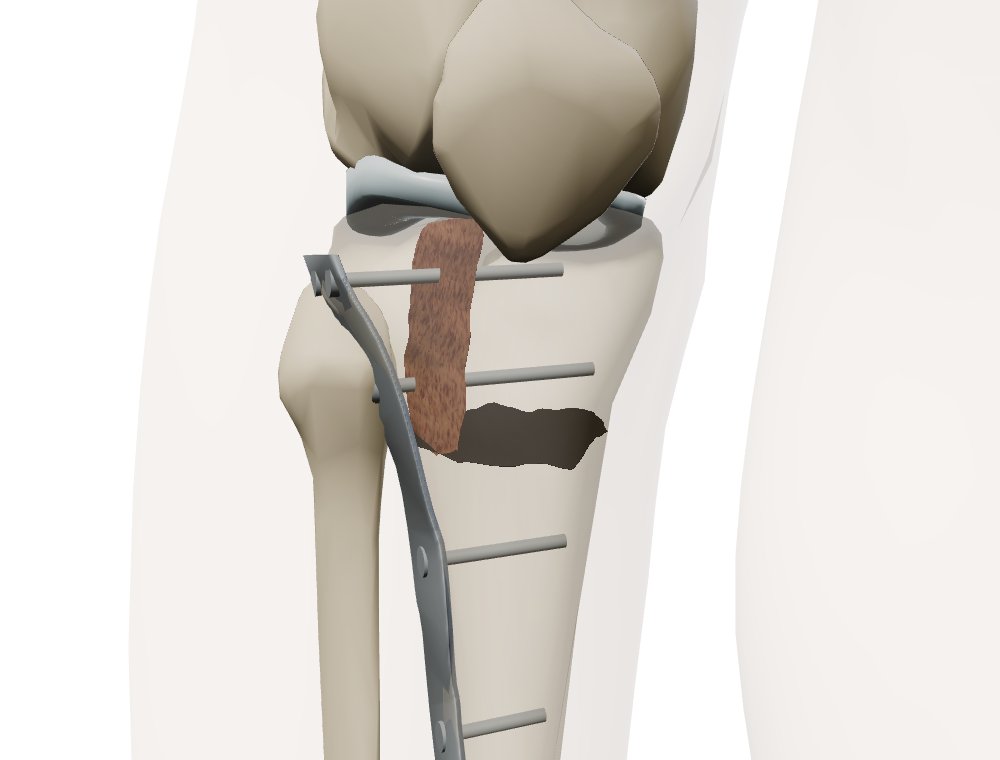
Through a cut on the outer side of the knee, the surgeon lifts the pushed-down joint surface back into place, often filling the gap below with bone substitute, and fixes everything with a plate shaped to the bone and screws. The meniscus is checked and repaired if needed. It usually takes two to three hours.
Anaesthesia and the hospital stay
You will be asleep (general anaesthesia) or numb from the waist down (spinal anaesthesia). Most people stay in hospital a few days.
Possible risks
- Wear of the joint (arthritis) in later years — fairly common over the years
- Stiffness of the knee — about 5 to 10 in 100
- Wound infection — about 2 to 5 in 100; more after high-energy injuries
- Compartment syndrome (dangerous swelling of the leg muscles) around the time of injury — about 1 to 3 in 100
- Injury to the nerve that lifts the foot — rare, less than 1 in 100
- Blood clot in the leg or lung — about 1 in 100
These figures are approximate. Your surgeon will tell you what applies to you.
After the operation
You walk with crutches, putting little or no weight on the leg for about six to eight weeks, as your surgeon advises. Move the joints above and below from the start. Injections or tablets prevent blood clots while you are less mobile. The bone heals in about three months; full recovery often takes six months to a year.
Questions people often ask
- Does the metal have to come out?
- No, it can stay for life. It is removed only if it bothers you, usually not before a year.
- When should I call the hospital?
- If the wound gets red, warm or leaks, if you get a fever, if pain or swelling suddenly get worse, if the foot becomes numb or cold, or if the calf swells and hurts.
The same explanation in 3D, step by step: what is broken or ill, how the operation is done, with the X-ray and a QR code to take home. Free.
See it in 3D →