 OpenDissect
Broken thigh bone: fixing it with a nail
Femoral shaft fracture · intramedullary nail
The same explanation in 3D, step by step: what is broken or ill, how the operation is done, with the X-ray and a QR code to take home. Free.
See it in 3D →Types
- Straight across
- Spiral break
- Broken in two places
What is broken
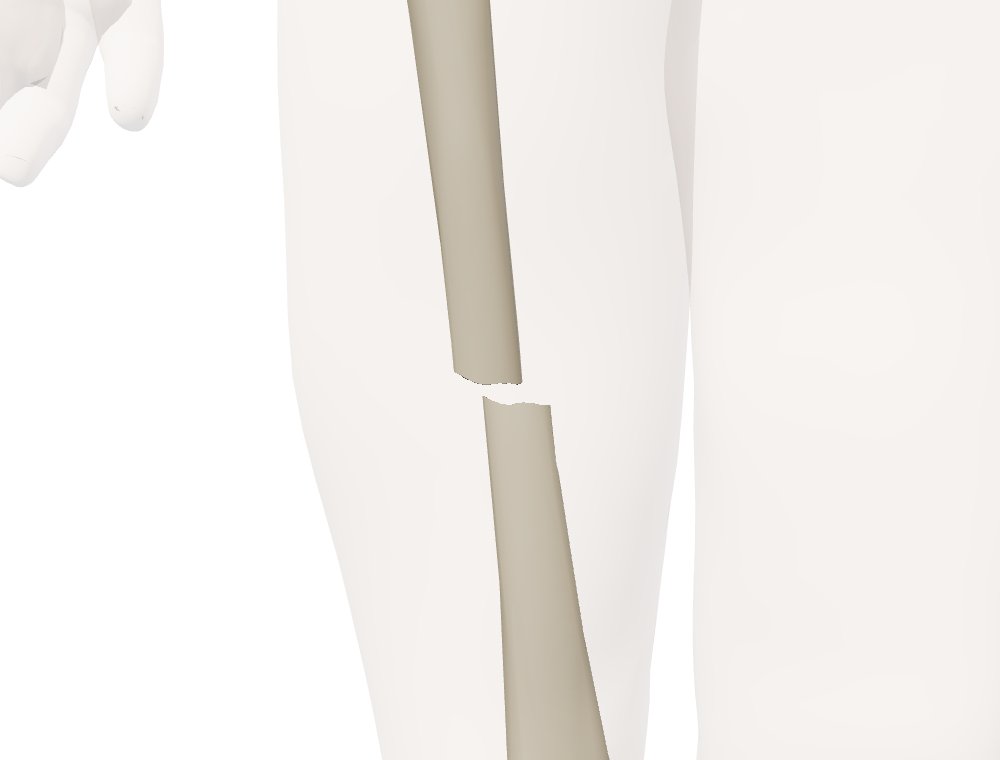
The thigh bone (femur) is the strongest bone in the body. It breaks in its long middle part after a high-energy injury, such as a road accident or a fall from a height. The strong thigh muscles pull the pieces so that the leg becomes short and turned, and there can be heavy bleeding into the thigh.
Why an operation
In adults this fracture is almost always operated on, ideally within a day. A nail lets you sit up, move and walk with crutches within days, lowers the risk of lung complications and clots, and holds the leg straight and the right length while the bone heals.
How the operation is done
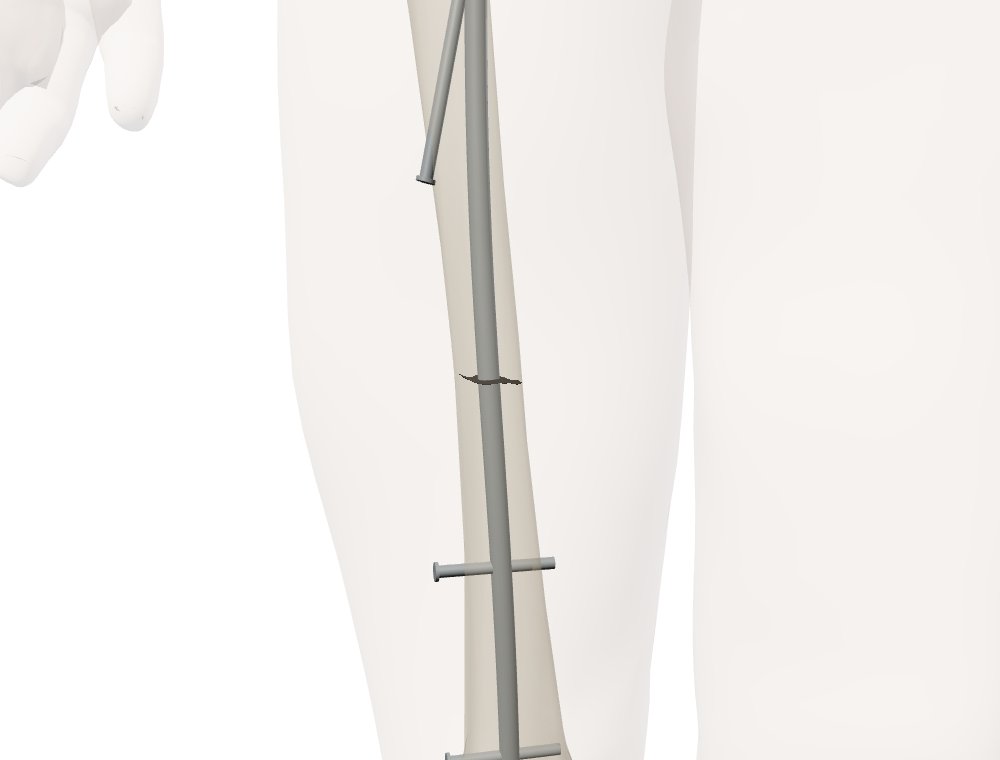
Through a small cut above the hip, a long metal rod (nail) is passed down the hollow centre of the bone across the break, under X-ray control. Screws through the bone and the nail at both ends stop the leg from shortening or twisting. Only small cuts are needed. It usually takes one and a half to two hours.
Anaesthesia and the hospital stay
You will be asleep (general anaesthesia). Most people stay in hospital about a week, depending on other injuries.
Possible risks
- Needing a blood transfusion — fairly common
- Pain in the hip or knee where the nail goes in — common, often improves
- The bone does not heal and needs another operation — about 2 to 5 in 100
- The leg heals slightly turned or shorter — about 5 to 10 in 100
- Fat or clots reaching the lungs (fat embolism), mainly in the first days — about 1 to 3 in 100
- Wound infection — about 1 to 2 in 100
These figures are approximate. Your surgeon will tell you what applies to you.
After the operation
You usually walk with crutches from the first days, often allowed to put weight on the leg as comfort permits. Physiotherapy strengthens the thigh and keeps the hip and knee moving. The bone takes three to six months to heal. The nail usually stays for life.
Questions people often ask
- Does the metal have to come out?
- No, it can stay for life. It is removed only if it bothers you, usually not before a year.
- When should I call the hospital?
- If the wound gets red, warm or leaks, if you get a fever, if pain or swelling suddenly get worse, if the foot becomes numb or cold, or if the calf swells and hurts.
The same explanation in 3D, step by step: what is broken or ill, how the operation is done, with the X-ray and a QR code to take home. Free.
See it in 3D →