 OpenDissect
Broken shin bone: fixing it with a nail
Tibial shaft fracture · intramedullary nail
The same explanation in 3D, step by step: what is broken or ill, how the operation is done, with the X-ray and a QR code to take home. Free.
See it in 3D →Types
- Spiral break
- Straight across
- With an extra piece
What is broken
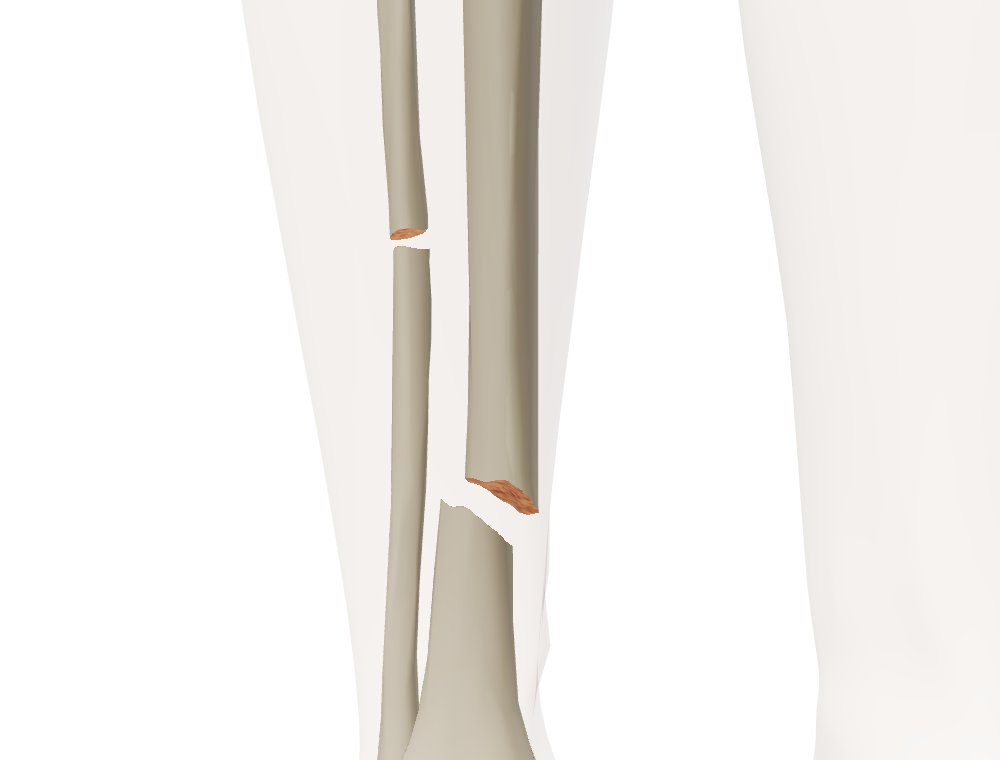
The shin bone (tibia) carries most of your weight. It breaks in its long middle part in sports injuries, falls and road accidents, often together with the thin outer bone (fibula). The skin over the shin is thin, so the bone sometimes breaks through it (open fracture).
Why an operation
Some stable breaks heal in a long cast, but this means months of limited walking and a risk of the bone healing crooked. A nail holds the bone straight, lets you walk with crutches early and avoids a cast. Open fractures always need an operation to clean the wound.
How the operation is done
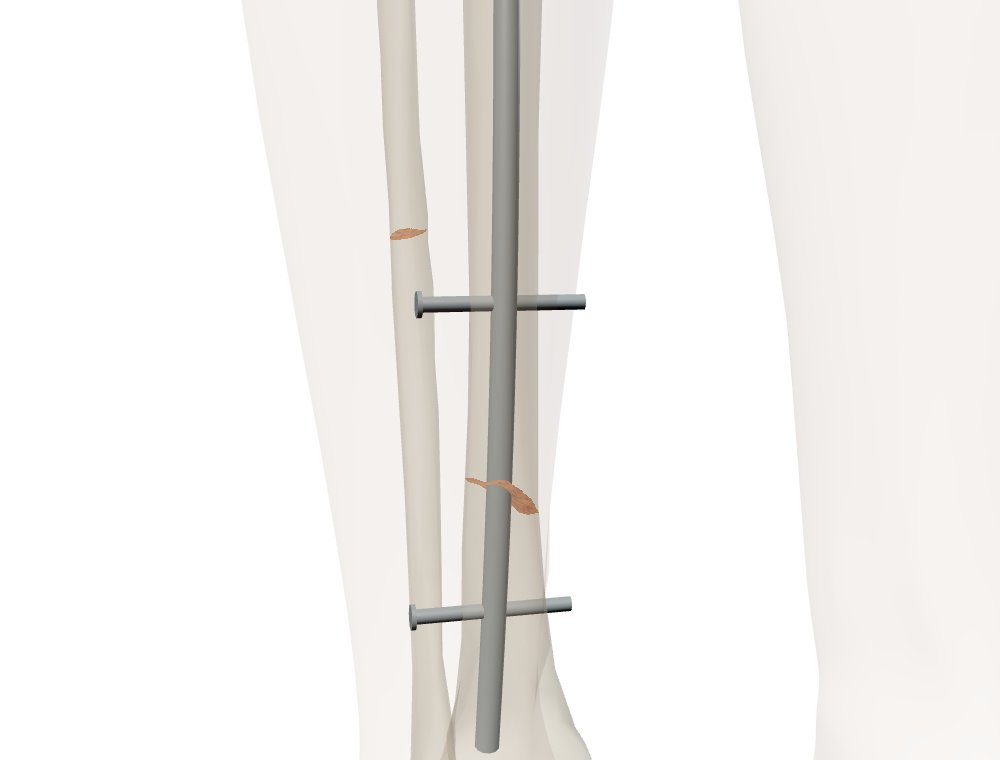
Through a small cut just below or above the kneecap, a metal rod (nail) is passed down the hollow centre of the shin bone across the break, under X-ray control. Screws at both ends lock it in place. It usually takes one and a half to two hours.
Anaesthesia and the hospital stay
You will be asleep (general anaesthesia) or numb from the waist down (spinal anaesthesia). Most people stay in hospital a few days.
Possible risks
- Pain at the front of the knee, especially when kneeling — common, about 1 in 3 to 1 in 2; often improves
- The bone does not heal and needs another operation — about 5 to 10 in 100
- Compartment syndrome (dangerous swelling of the leg muscles), needing release cuts — about 2 to 5 in 100
- Wound infection — about 1 to 2 in 100; more with open fractures
- Blood clot in the leg or lung — about 1 in 100
These figures are approximate. Your surgeon will tell you what applies to you.
After the operation
You walk with crutches from the first days, often putting weight on the leg as comfort allows. Keep the leg raised when sitting in the first weeks to reduce swelling. The bone takes three to six months to heal; running and sport come back gradually after that.
Questions people often ask
- Does the metal have to come out?
- No, it can stay for life. It is removed only if it bothers you, usually not before a year.
- When should I call the hospital?
- If the wound gets red, warm or leaks, if you get a fever, if pain or swelling suddenly get worse, if the foot becomes numb or cold, or if the calf swells and hurts.
The same explanation in 3D, step by step: what is broken or ill, how the operation is done, with the X-ray and a QR code to take home. Free.
See it in 3D →