 OpenDissect
Broken heel bone: fixing it with a plate or screws
Calcaneus fracture · plate or screws
The same explanation in 3D, step by step: what is broken or ill, how the operation is done, with the X-ray and a QR code to take home. Free.
See it in 3D →Types
- Joint surface pushed down
- Tongue-shaped piece
What is broken
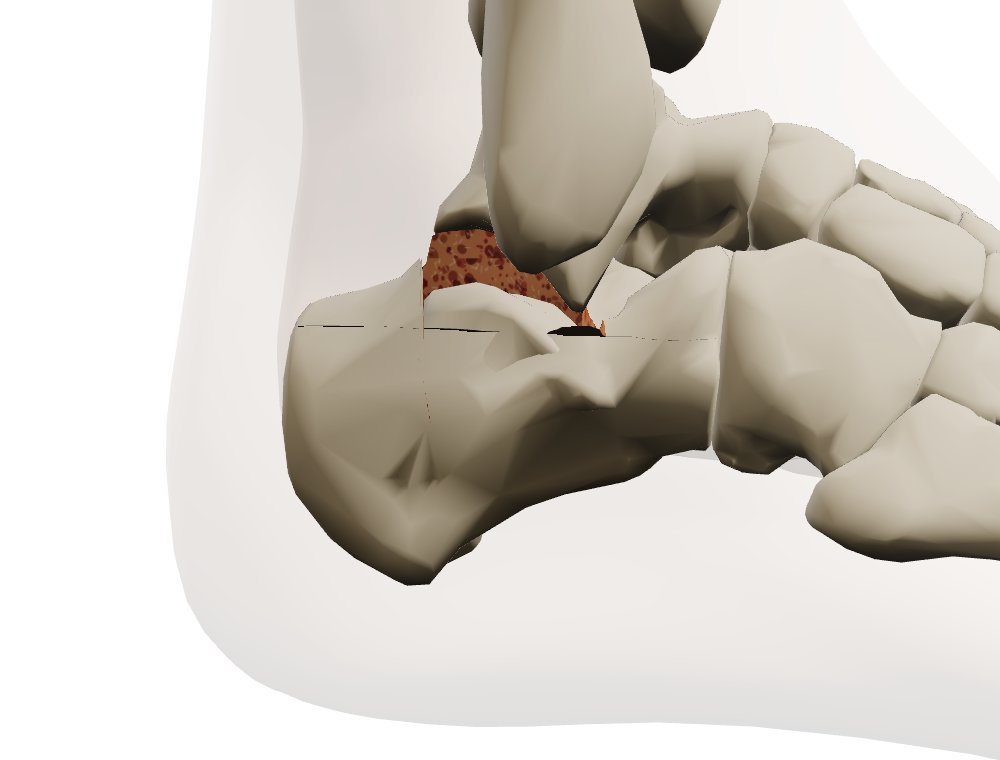
The heel bone (calcaneus) takes your weight when you stand. It breaks when you land on your feet from a height. The bone is squashed: it becomes shorter and wider, and the joint under the ankle (subtalar joint) gets a step.
Why an operation
Not every heel fracture needs an operation; the choice depends on the shape of the break, your age, smoking, diabetes and the state of the skin. Restoring the height, width and the joint surface can give a better-shaped foot that fits in shoes and walks better.
How the operation is done
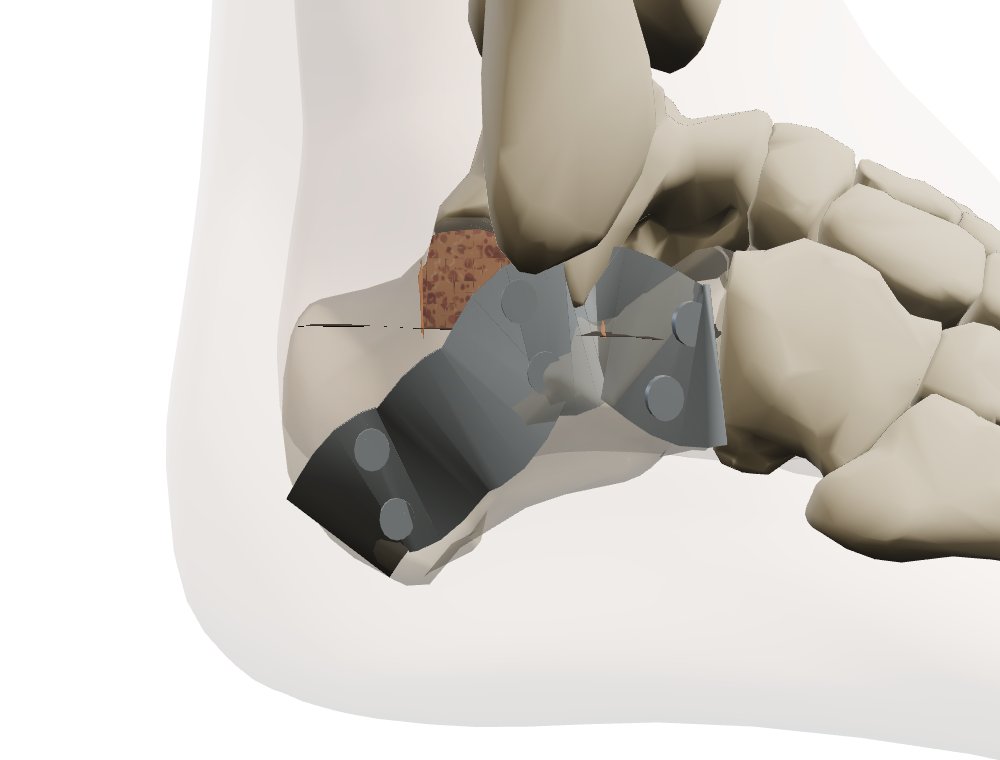
The operation is usually done after one to two weeks, when the swelling has gone down. Through a small cut on the outer side of the heel (sinus tarsi) or a larger L-shaped cut, the surgeon lifts the joint surface, restores the shape of the heel and fixes it with a plate or screws. It usually takes one and a half to two and a half hours.
Anaesthesia and the hospital stay
You will be asleep (general anaesthesia) or numb from the waist down (spinal anaesthesia). Most people stay in hospital a few days.
Possible risks
- Wound healing problems or infection — about 2 to 5 in 100 with small cuts; more with large cuts, smoking or diabetes
- Wear of the joint (arthritis) in later years — fairly common; some later need a fusion of this joint
- Numbness on the outer edge of the foot (sural nerve) — about 2 to 5 in 100
- Pain under the heel or on walking on uneven ground — common
- Blood clot in the leg or lung — about 1 in 100
These figures are approximate. Your surgeon will tell you what applies to you.
After the operation
Keep the foot raised in the first weeks. Move the ankle and toes early but do not put weight on the foot for about eight to twelve weeks. Recovery takes a year or more; many people need well-cushioned shoes or insoles.
Questions people often ask
- Does the metal have to come out?
- No, it can stay for life. It is removed only if it bothers you, usually not before a year.
- When should I call the hospital?
- If the wound gets red, warm or leaks, if you get a fever, if pain or swelling suddenly get worse, if the foot becomes numb or cold, or if the calf swells and hurts.
The same explanation in 3D, step by step: what is broken or ill, how the operation is done, with the X-ray and a QR code to take home. Free.
See it in 3D →