 OpenDissect
Broken forearm: fixing it with plates
Forearm shaft fracture · plates
The same explanation in 3D, step by step: what is broken or ill, how the operation is done, with the X-ray and a QR code to take home. Free.
See it in 3D →Types
- Both bones broken across
- Both bones, with an extra piece
What is broken
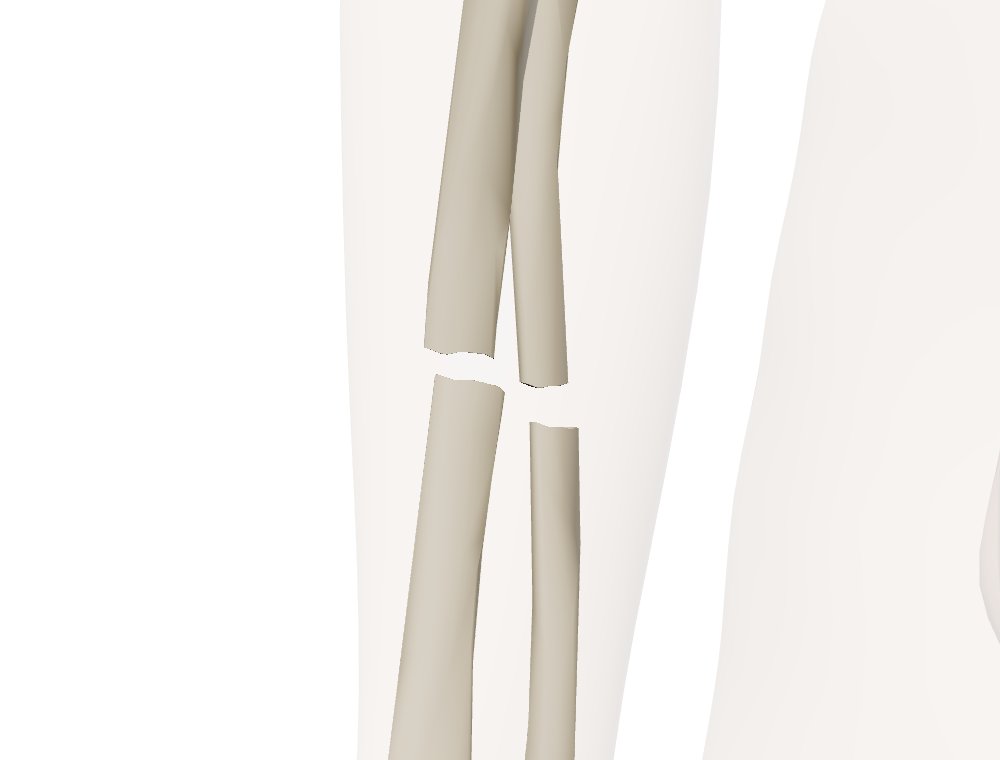
The forearm has two bones, the radius and the ulna, which turn around each other when you rotate the hand to show the palm or the back. In adults, when both are broken and out of line, this turning movement is lost and the arm is unstable.
Why an operation
In adults, these fractures heal crooked or not at all in a cast, and turning the hand stays limited. Plates restore the exact shape of both bones, so the forearm can turn again, and allow early movement without a cast.
How the operation is done
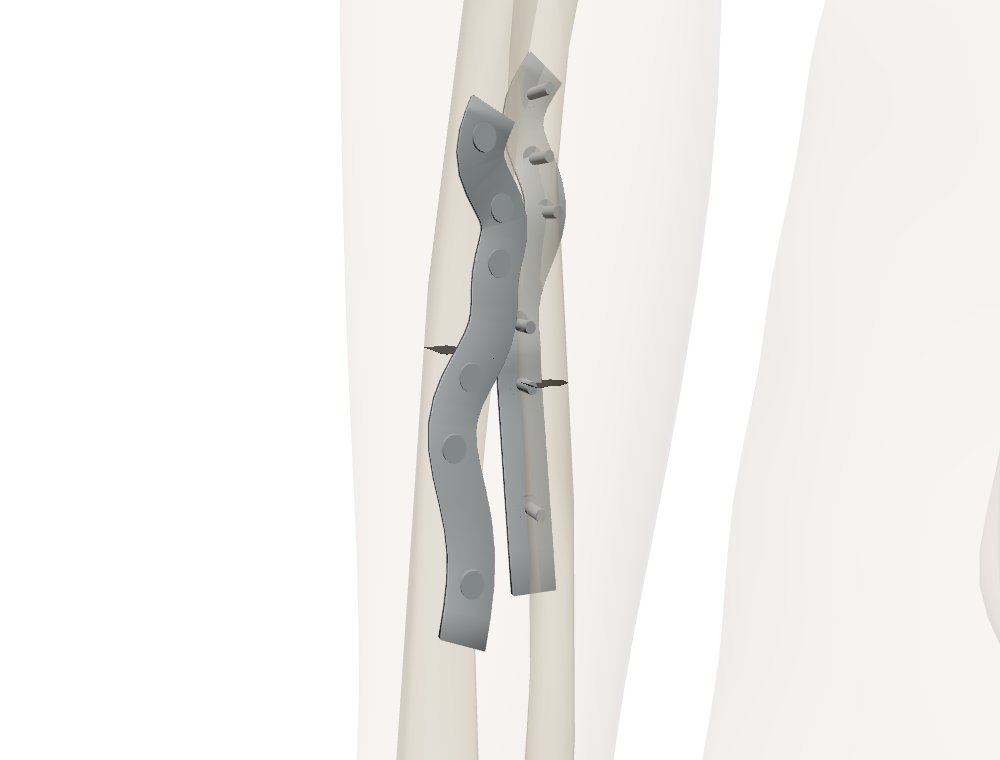
Each bone is reached through its own cut: the radius from the palm side of the forearm, the ulna along its edge on the back. The pieces are lined up and fixed with a metal plate and screws on each bone, while the nerves and vessels are protected. It usually takes one and a half to two hours.
Anaesthesia and the hospital stay
Often only the arm is numbed (regional anaesthesia); sometimes you are asleep. Many people go home the same day or the next day.
Possible risks
- Some loss of turning the forearm — fairly common, usually mild
- Irritation of a nerve (numbness or weakness of the thumb or fingers), mostly temporary — about 2 to 5 in 100
- Wound infection — about 1 to 3 in 100
- The bone does not heal and needs another operation — about 2 to 5 in 100
- A new fracture if the plates are removed too early — uncommon; the plates usually stay
These figures are approximate. Your surgeon will tell you what applies to you.
After the operation
Keep the hand raised for the first days and move the fingers, wrist and elbow early. Usually no cast is needed. Do not lift heavy things for about six weeks. The bones heal in three to four months; contact sport is usually possible after that.
Questions people often ask
- Does the metal have to come out?
- No, it can stay for life. It is removed only if it bothers you, usually not before a year.
- When should I call the hospital?
- If the wound becomes red, warm, swollen or leaks, if you get a fever, or if the fingers become numb, cold or very swollen.
The same explanation in 3D, step by step: what is broken or ill, how the operation is done, with the X-ray and a QR code to take home. Free.
See it in 3D →