 OpenDissect
Broken collarbone: fixing it with a plate
Clavicle fracture · plate
The same explanation in 3D, step by step: what is broken or ill, how the operation is done, with the X-ray and a QR code to take home. Free.
See it in 3D →Types
- Middle part, simple break
- Middle part, with an extra piece
What is broken
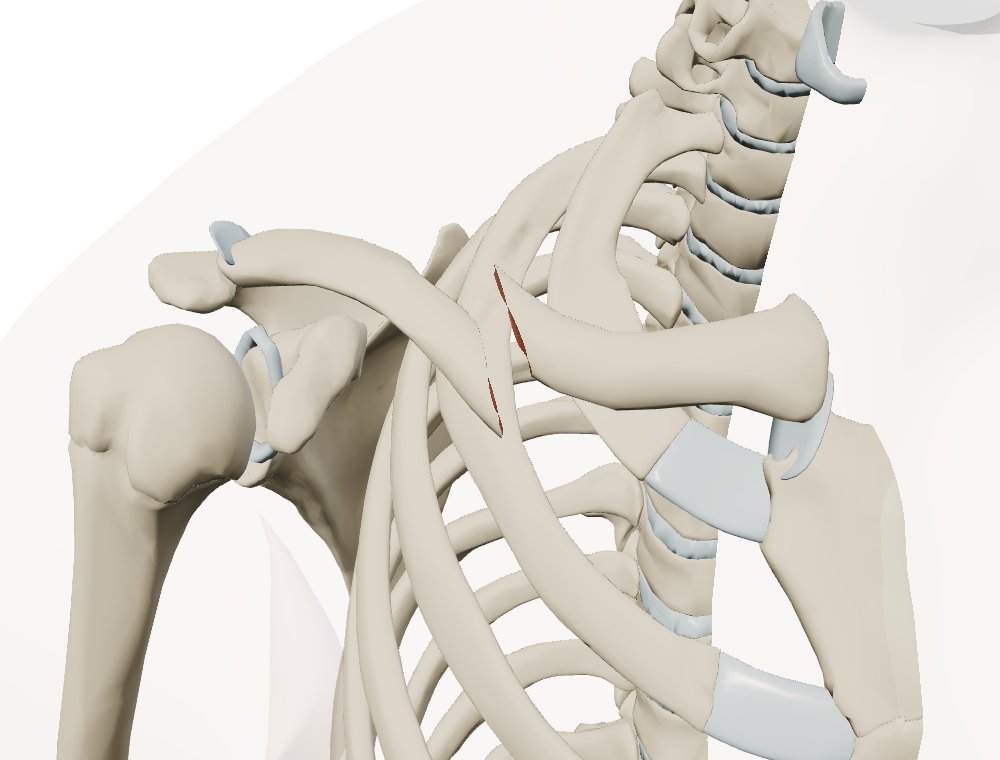
The collarbone (clavicle) connects the shoulder to the breastbone. It usually breaks in its middle part after a fall onto the shoulder, for example from a bicycle. The ends of the bone can overlap, so the shoulder drops and moves forward.
Why an operation
Many collarbone fractures heal well in a sling. When the ends are far apart or shortened, the bone heals less often without an operation (about 1 in 7 does not heal) and the shoulder may stay weaker. A plate holds the bone straight, the pain settles faster and you can use the arm earlier. You and your surgeon weigh this against the risks.
How the operation is done
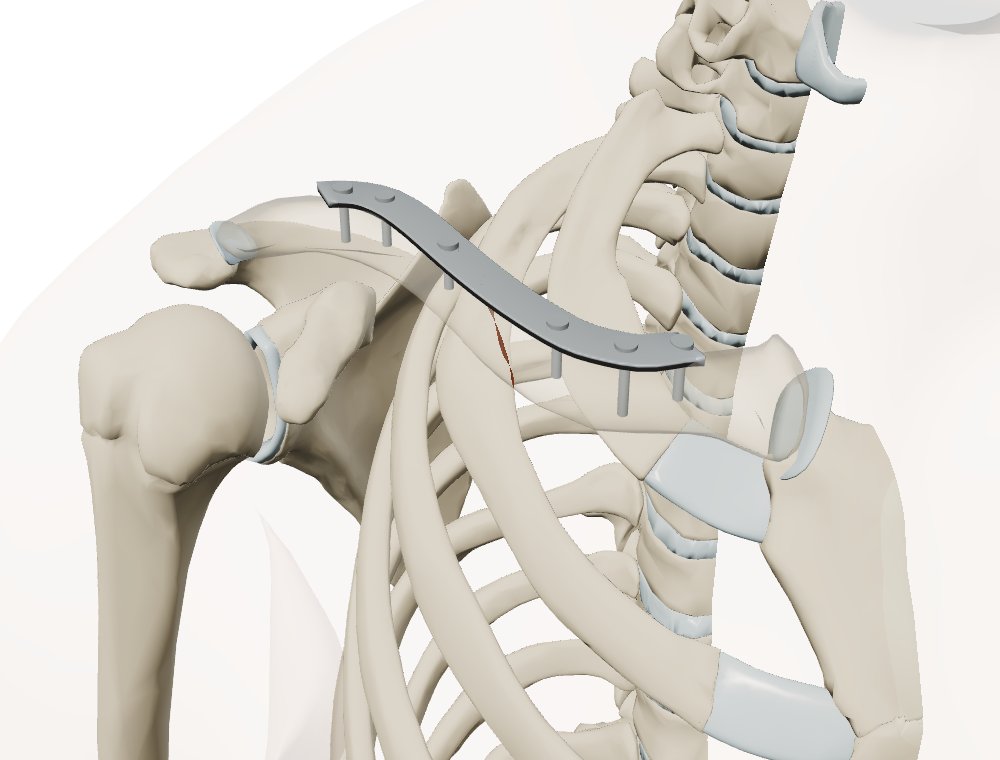
Through a cut along the collarbone, the surgeon puts the pieces back in line and fixes them with a thin metal plate and screws on top of or in front of the bone. Great care is taken with the large vessels and nerves that lie under the bone. It usually takes about an hour.
Anaesthesia and the hospital stay
You will be asleep (general anaesthesia), often with an extra numbing injection in the neck. Many people go home the same day or the next day.
Possible risks
- Numb patch of skin below the scar — common, about 1 in 3; often improves
- The plate bothers under the skin and is removed later — about 1 in 10 to 1 in 5
- Wound infection — about 1 to 3 in 100
- The bone does not heal and needs another operation — about 1 to 3 in 100
- Injury to the large vessels or nerves under the collarbone — rare, less than 1 in 100
These figures are approximate. Your surgeon will tell you what applies to you.
After the operation
You wear a sling for comfort for one to two weeks and start moving the shoulder gently straight away, as the physiotherapist shows you. Do not lift heavy things or lift the arm above the shoulder with weight for about six weeks. The bone takes about two to three months to heal; contact sport is usually possible after three months.
Questions people often ask
- Does the metal have to come out?
- No, it can stay for life. It is removed only if it bothers you, usually not before a year.
- When can I drive and work?
- Office work often after one to two weeks; driving when you can turn the wheel quickly without pain, usually after two to four weeks.
- When should I call the hospital?
- If the wound gets red, warm or leaks, if you get a fever, or if pain, swelling or numbness suddenly get worse.
The same explanation in 3D, step by step: what is broken or ill, how the operation is done, with the X-ray and a QR code to take home. Free.
See it in 3D →