 OpenDissect
Broken back (spine): fixing it with screws and rods
Thoracolumbar fracture · posterior fixation
The same explanation in 3D, step by step: what is broken or ill, how the operation is done, with the X-ray and a QR code to take home. Free.
See it in 3D →Types
- Burst fracture of the vertebra
- Torn ligaments at the back of the spine
What is broken
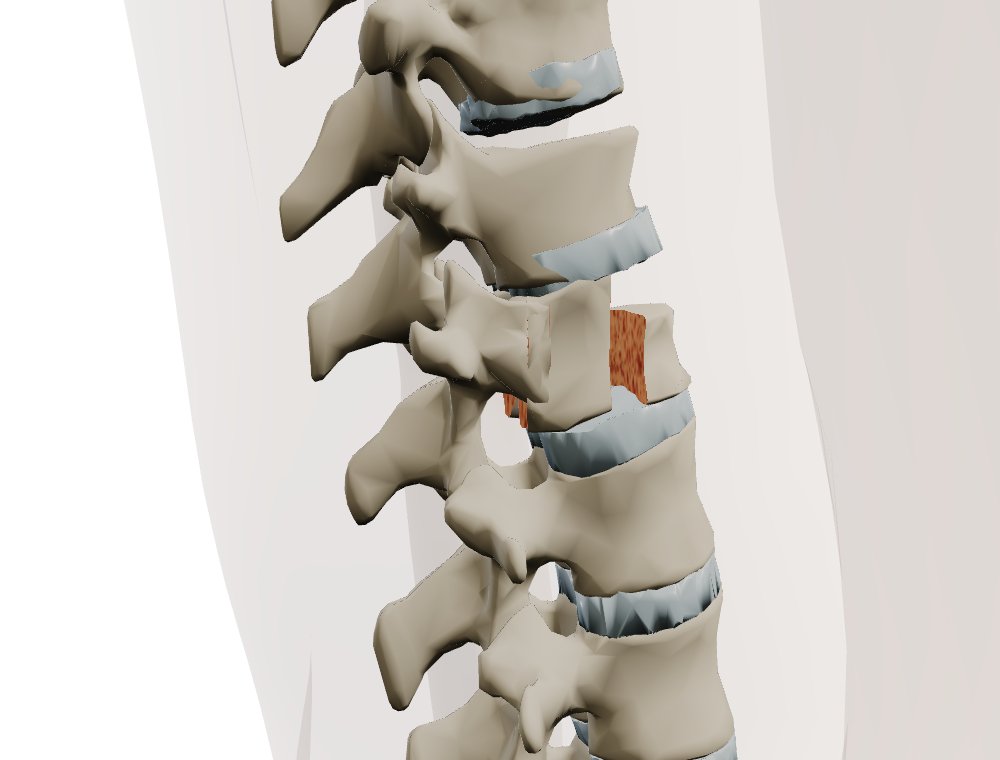
The spine is a column of bones (vertebrae) that protects the spinal cord and nerves. A fall from a height or a road accident can break a vertebra where the chest meets the lower back. In your case the break makes the spine unstable, so it could bend further or press on the nerves.
Why an operation
Many stable spine fractures heal with pain relief and early walking. When the spine is unstable, is bent, or the nerves are at risk, screws and rods hold it in the right position while the bone heals, protect the nerves and let you get up early without a long time in bed.
How the operation is done
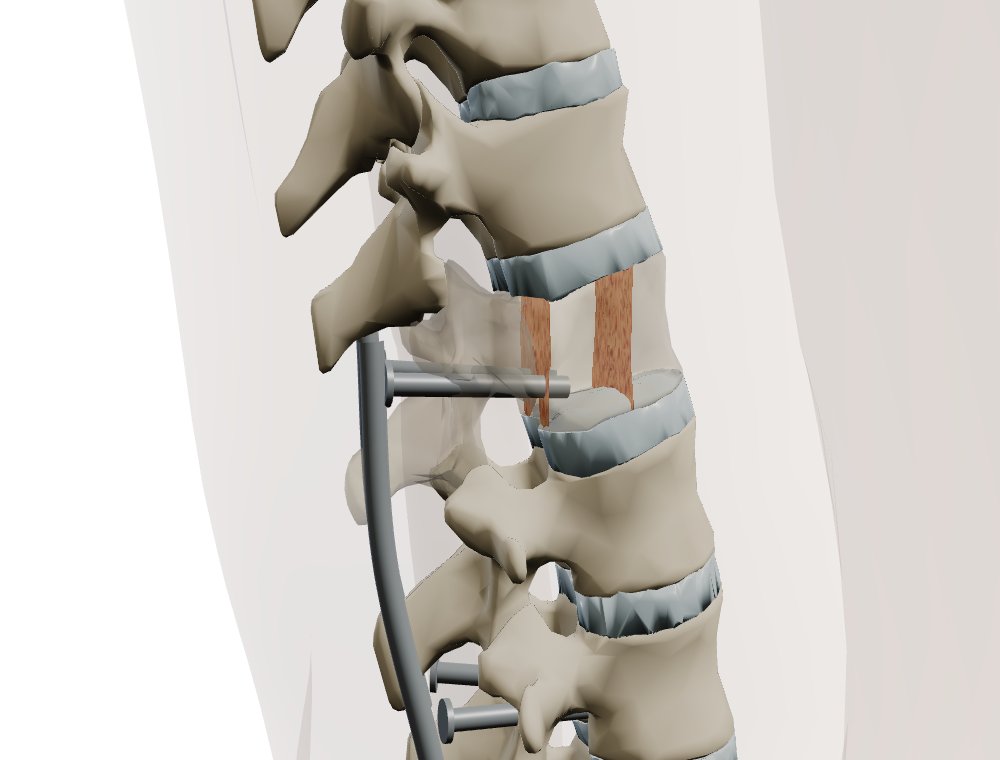
You lie on your front. Through one cut in the middle of the back, or several small cuts, screws are placed into the vertebrae above and below the broken one, under X-ray control, and joined on each side with a metal rod. If bone pieces press on the nerves, they are freed. It usually takes two to three hours.
Anaesthesia and the hospital stay
You will be asleep (general anaesthesia). Most people stay in hospital about a week, depending on other injuries.
Possible risks
- Wound infection — about 2 to 5 in 100
- A screw lies in the wrong place and needs correcting — about 1 to 3 in 100
- Injury to a nerve or the spinal cord (weakness, numbness, bladder problems) — rare, less than 1 in 100
- Leak of the fluid around the nerves — about 1 to 3 in 100
- Back pain that continues; the screws loosen or break — about 5 to 10 in 100
- Blood clot in the leg or lung — about 1 in 100
These figures are approximate. Your surgeon will tell you what applies to you.
After the operation
You usually get up on the first day with the physiotherapist; often no brace is needed. Avoid lifting heavy things and twisting for about three months. Walking is the best exercise. The bone heals in about three months. The screws and rods are sometimes removed after one year, especially in young people.
Questions people often ask
- Does the metal have to come out?
- No, it can stay for life. It is removed only if it bothers you, usually not before a year.
- When should I call the hospital?
- Straight away with new weakness or numbness in the legs, or difficulty passing urine or controlling the bowels; also with fever or a red, leaking wound.
The same explanation in 3D, step by step: what is broken or ill, how the operation is done, with the X-ray and a QR code to take home. Free.
See it in 3D →