 OpenDissect
Blood clot in a leg or arm artery: removing it (embolectomy)
Acute limb ischaemia · emergency operation
The same explanation in 3D, step by step: what is broken or ill, how the operation is done, with the X-ray and a QR code to take home. Free.
See it in 3D →What is the problem
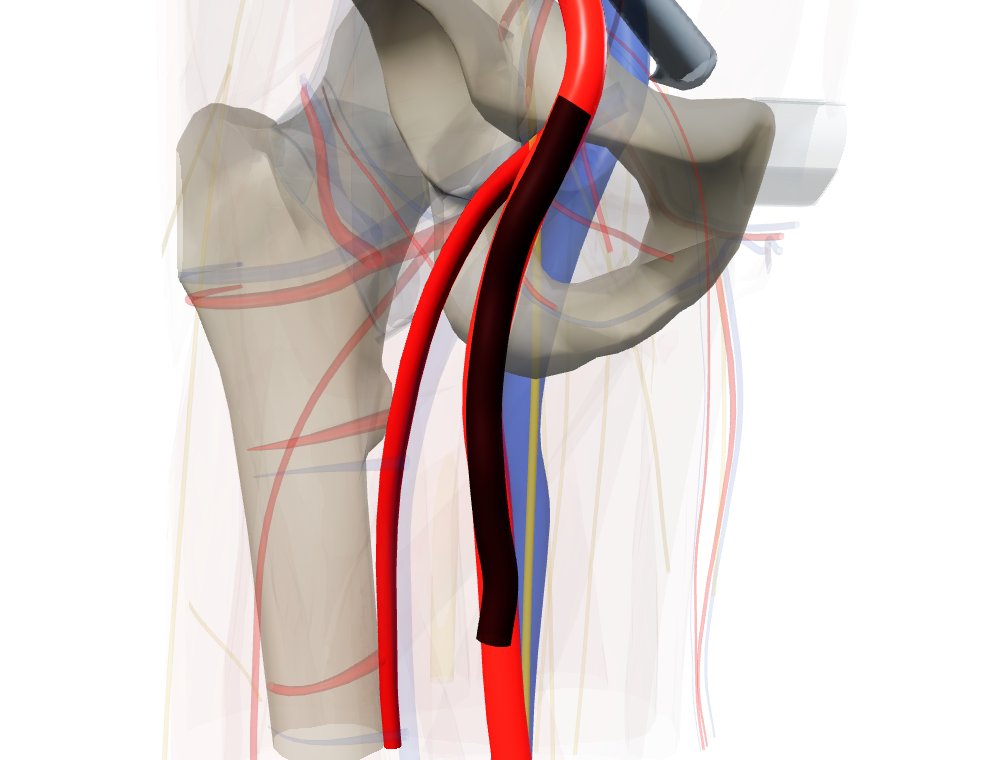
A blood clot, often coming from the heart (for example with an irregular heartbeat), can suddenly block a main artery of the leg or arm. The limb becomes painful, pale, cold and numb, and may become weak. Without blood, muscles and nerves start to die within hours.
Why an operation
This is an emergency: the faster the blood flow returns, the better the chance of saving the limb and its function. The clot is removed with an operation, sometimes combined or replaced by treatment from inside the artery or by clot-dissolving medicine. Blood thinners are started at once.
How the operation is done
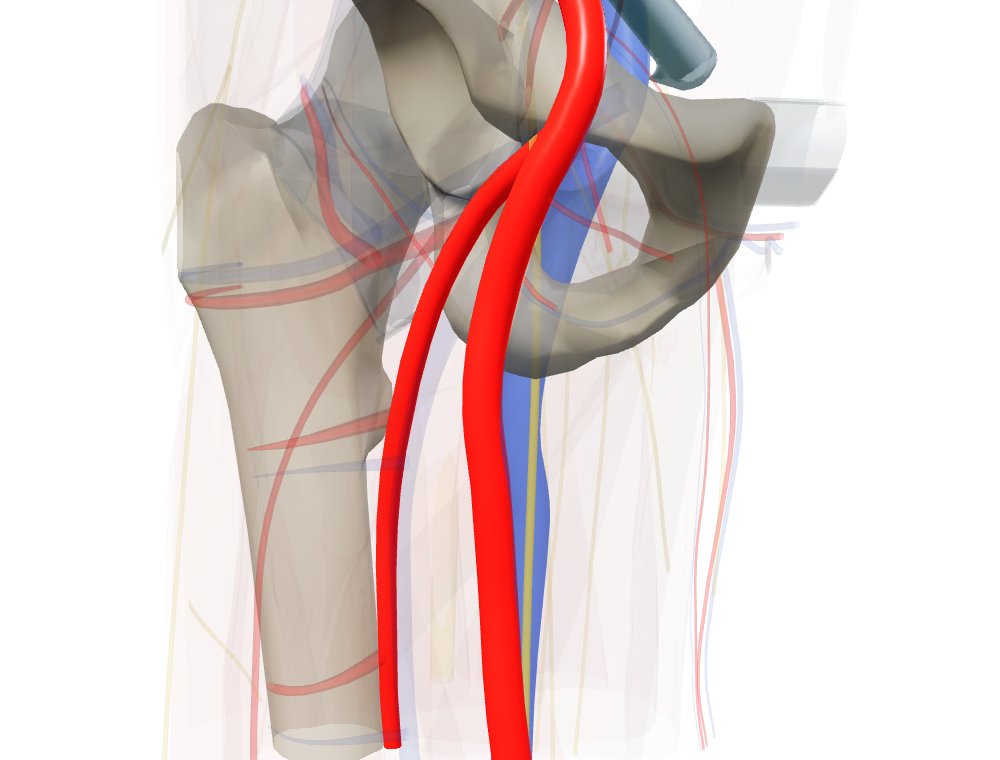
Through a cut in the groin (for the leg) or at the elbow (for the arm), the artery is opened. A thin tube with a small balloon at its tip is pushed past the clot, the balloon is inflated and gently pulled back, bringing the clot out. This is repeated until blood flows freely, checked with X-ray dye. The artery and the skin are then closed. It usually takes one to two hours.
Anaesthesia and the hospital stay
It can be done with local anaesthesia, with a regional block, or asleep. The hospital stay depends on the cause of the clot and on your general health, often several days.
Possible risks
- Swelling of the muscles once blood returns (compartment syndrome), needing cuts to release the pressure — about 5 to 20 in 100, depending on how long the blood was cut off
- The clot comes back or remains; further treatment needed — about 1 in 10
- Loss of the limb (amputation) despite treatment — about 5 to 15 in 100 for the leg; rarer for the arm
- Wound infection or fluid collection in the groin — about 5 to 10 in 100
- Serious general illness (heart, kidneys) that can be life-threatening — not rare, because many patients are already ill; your doctor will discuss your own risk
These figures are approximate. Your surgeon will tell you what applies to you.
After the operation
The limb is checked often for warmth, colour, feeling and movement. Blood thinners continue, often for life, and the cause of the clot (for example an irregular heartbeat) is looked for and treated. Physiotherapy helps if the muscles or nerves were affected. Recovery depends on how long the limb was without blood.
Questions people often ask
- Why do I need blood thinners afterwards?
- To stop new clots forming, in the same artery or elsewhere, for example in the brain.
- When should I call the hospital?
- At once if the limb becomes cold, pale, numb or very painful again, or with any sign of a stroke; also with fever or a red, swollen wound.
The same explanation in 3D, step by step: what is broken or ill, how the operation is done, with the X-ray and a QR code to take home. Free.
See it in 3D →