 OpenDissect
Bladder tube through the belly (suprapubic catheter)
Suprapubic catheter · small procedure
The same explanation in 3D, step by step: what is broken or ill, how the operation is done, with the X-ray and a QR code to take home. Free.
See it in 3D →What is the problem
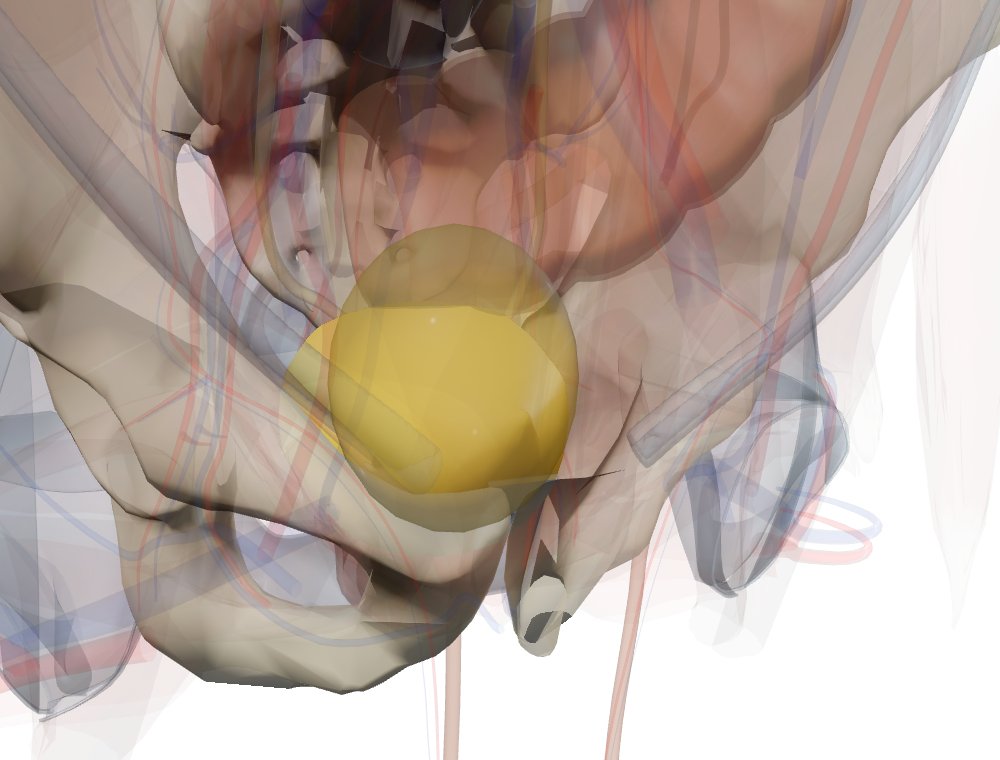
Some people cannot empty the bladder, for example with an enlarged prostate, after an injury of the urethra, or with nerve problems; others need a catheter for a long time. A catheter through the urethra can be uncomfortable, block, or damage the urethra over time.
Why an operation
A tube placed through the lower belly, just above the pubic bone, drains the bladder directly. It is more comfortable for long-term use, lowers the risk of urethral damage, is easier to change, and allows you to try passing urine normally while it is still in place.
How the operation is done
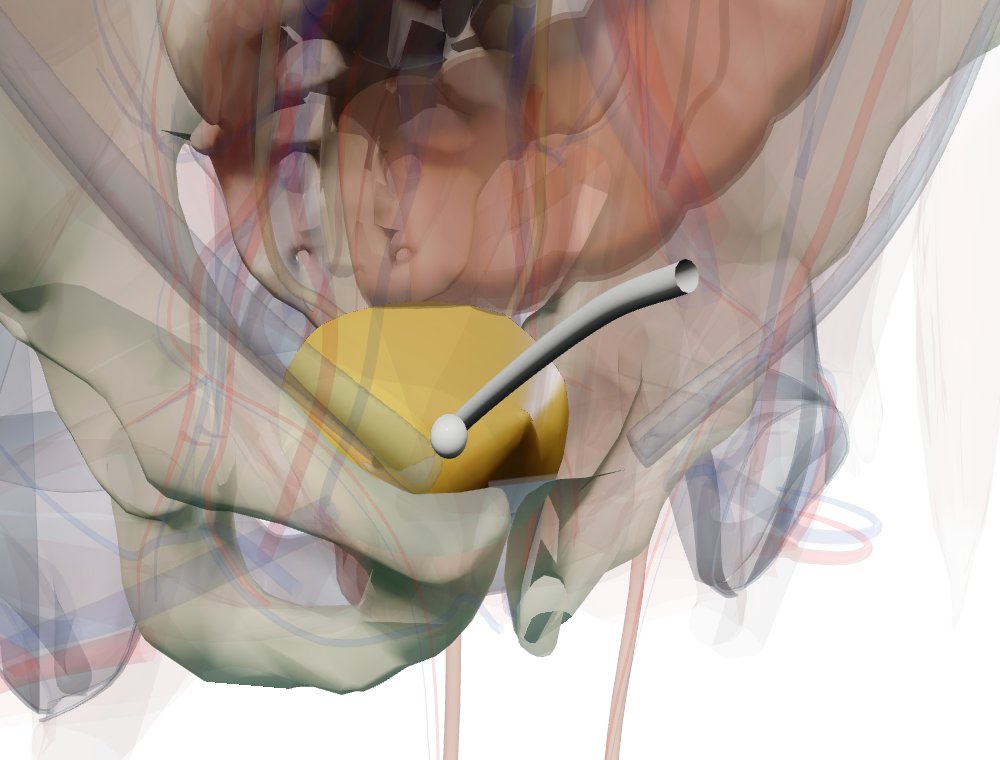
The bladder must be full, filled through a catheter if needed, so that it lies against the belly wall and the bowel is pushed away; ultrasound checks this. After numbing the skin two finger-widths above the pubic bone, a needle and then the tube are pushed into the bladder. A small balloon holds it in place. It takes about 15 to 20 minutes.
Anaesthesia and the hospital stay
It is usually done with local anaesthesia, sometimes during another operation under anaesthesia. Many people go home the same day.
Possible risks
- Blood in the urine for a day or two — common, usually harmless
- Urine infection — fairly common with any long-term catheter
- Blocked or dislodged tube, needing a change — about 5 to 10 in 100
- Injury to the bowel by the needle — rare, about 1 in 100 or less; more after earlier belly operations
- Skin irritation or infection around the tube — about 5 to 10 in 100
These figures are approximate. Your surgeon will tell you what applies to you.
After the operation
Keep the bag below the bladder and drink plenty. Clean the skin around the tube daily with water. The tube is usually changed every four to twelve weeks, first by the team and later often by a nurse at home. Showering is fine once the skin has healed.
Questions people often ask
- When should I call the hospital?
- If no urine drains for a few hours, if you get a fever, chills, belly pain, or the urine becomes cloudy, smelly or very bloody.
The same explanation in 3D, step by step: what is broken or ill, how the operation is done, with the X-ray and a QR code to take home. Free.
See it in 3D →